
Townsendia exscapa
Townsendia exscapa
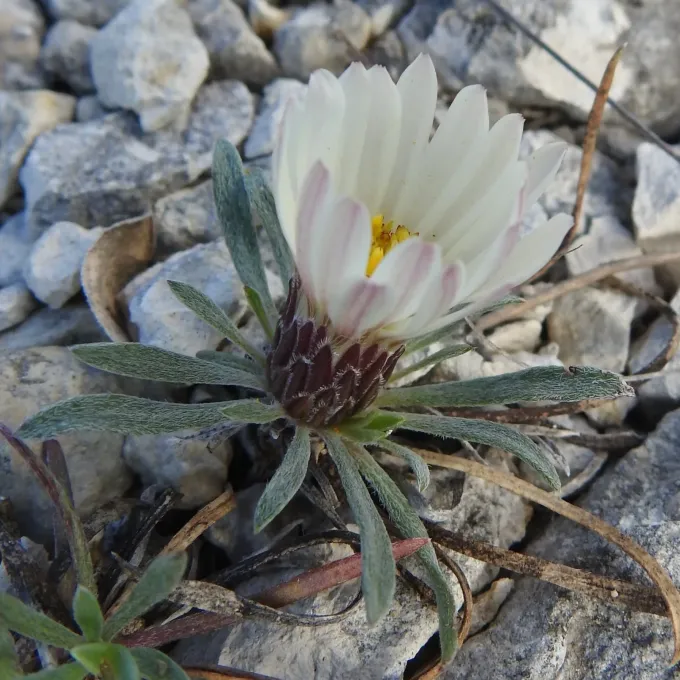
Description
Sowing dates
Townsendia exscapa is a perennial plant within the Asteraceae family that typically thrives in cold-hardy environments and requires specific germination protocols.
Propagation is most successful when seeds are sown in autumn or early spring, as they often require a period of cold stratification to break dormancy.
The seeds should be sown on the surface of a well-draining, mineral-based substrate and covered only very lightly to ensure proper exposure to light.
During the germination phase, it is essential to maintain consistent moisture, but the medium must not become waterlogged to avoid seed decay.
Once seedlings have developed their first true leaves, they should be carefully transplanted into individual pots before moving them to their permanent garden location.
Growing requirements
Native to the dry prairies and rocky slopes of North America, this species is perfectly adapted to harsh, resource-limited environments.
It demands excellent drainage, making it an ideal candidate for rock gardens, scree beds, or containers filled with gravelly, non-organic soil.
The plant exhibits high drought tolerance and prefers full sun exposure to maintain its characteristic compact, stemless, or near-stemless growth habit.
Soil pH should ideally be neutral or slightly alkaline, as the plant is sensitive to the acidic conditions common in nutrient-rich forest soils.
Winter hardiness is a defining feature of the species, allowing it to withstand freezing temperatures provided that the roots are kept dry during the dormant season.
Main diseases and pests
The most significant threat to the health of Townsendia exscapa is excessive moisture, which frequently leads to crown rot and total plant collapse.
Inadequate air circulation around the base of the plant can promote the growth of mildew and other fungal pathogens that disfigure the foliage.
Aphids and spider mites are common pests that may infest the plants, particularly when they are grown in stressful, non-optimal conditions or under drought stress.
Soil-borne diseases such as root rot are typically associated with heavy, clay-based soils that do not allow for the rapid drainage required by this species.
Regular monitoring and the application of a gravel mulch layer are recommended practices to minimize soil-borne disease risks and keep the crown area dry.