
Codonopsis lanceolata
Codonopsis lanceolata (Siebold & Zucc.) Trautv.
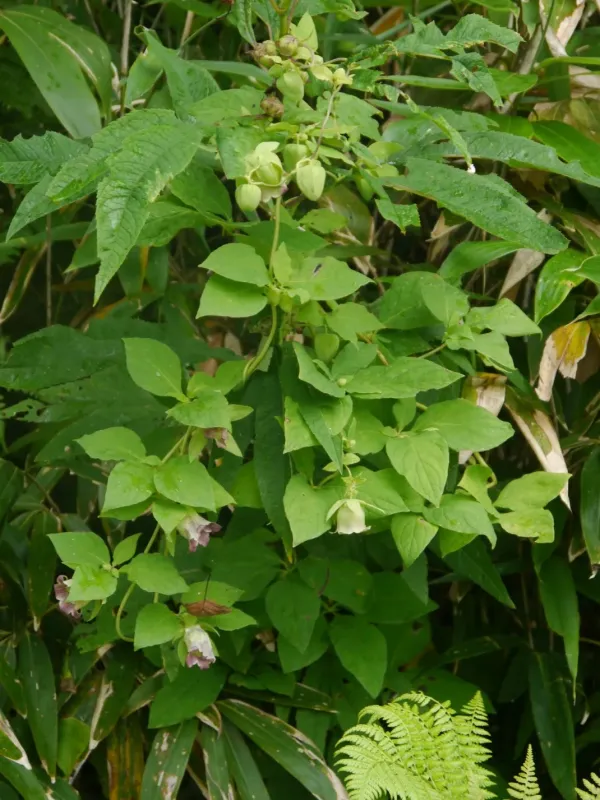
Description
Sowing dates
Codonopsis lanceolata, a member of the Campanulaceae family, is a climbing perennial plant known for its medicinal roots. In commercial farming, seeds are the primary method of propagation.
Sowing in open fields should occur in early spring once the soil temperature is consistently above 10 degrees Celsius. Pre-sowing stratification is often required to break seed dormancy and ensure higher germination rates.
Starting seedlings in trays or greenhouses several weeks before the final frost helps establish a stronger root system and provides a head start on the growing season.
Plant spacing should be approximately 30 to 40 centimeters apart, allowing sufficient airflow to prevent diseases. Vertical supports are mandatory for the vines to ensure optimal exposure to sunlight.
The planting depth for seeds should be shallow, as they require light to germinate effectively. Maintaining a fine, crumbly soil structure during the sowing phase is crucial for success.
Growing requirements
This crop thrives in well-drained, fertile, loamy soils. Excessive moisture retention in heavy soils can lead to root rot, which is a major concern for the quality of the final product.
Codonopsis lanceolata prefers sunny locations but benefits from partial shade in hot climates to prevent the foliage from scorching during the peak summer months.
The optimal pH range for this plant is between 6.0 and 7.0. Regular soil testing is recommended to ensure that nutrient levels remain balanced for healthy root development.
Regular irrigation is necessary during the active growth phase, especially during dry spells. However, avoiding waterlogging is essential to maintain the integrity of the edible and medicinal roots.
The plant is relatively hardy and can tolerate moderate winter temperatures, making it a viable crop for many temperate regions provided the soil does not freeze too deeply.
Main diseases and pests
Common pests like aphids and spider mites can attack the vines. Implementing integrated pest management strategies helps reduce the reliance on harsh chemicals and protects the medicinal quality.
Root rot is the most significant threat to Codonopsis, often triggered by soil-borne fungi and excessive irrigation. Proper soil management and drainage are the best preventative measures.
Powdery mildew may manifest as a white coating on the leaves if humidity levels are high or if the plants are placed too close together. Improving circulation is critical for control.
Nematodes can cause significant damage to the roots, which decreases both the yield and the market value of the crop. Crop rotation is highly recommended to manage nematode populations.
Regular field scouting is essential to identify threats early, allowing for targeted intervention before a small issue becomes a widespread crop failure.
Harvesting
Harvesting usually takes place in the autumn of the second or third year, when the plant has finished its vegetative cycle and the roots are rich in saponins and nutrients.
Mechanical harvesting equipment is typically used to extract the deep-growing roots. The process must be done carefully to prevent mechanical damage to the long, tuberous roots.
After excavation, the roots are thoroughly cleaned to remove soil and impurities. Any small lateral roots are trimmed, and the main roots are carefully prepared for the drying process.
Drying is performed in controlled environments, such as ventilated drying sheds or professional dehydrators, to prevent mold growth and preserve active compounds.
Once dried, the roots must be stored in cool, dry conditions away from direct sunlight to ensure a long shelf life and the retention of their pharmacological potency.