
Codonopsis javanica
Codonopsis javanica (Blume) Hook. f.
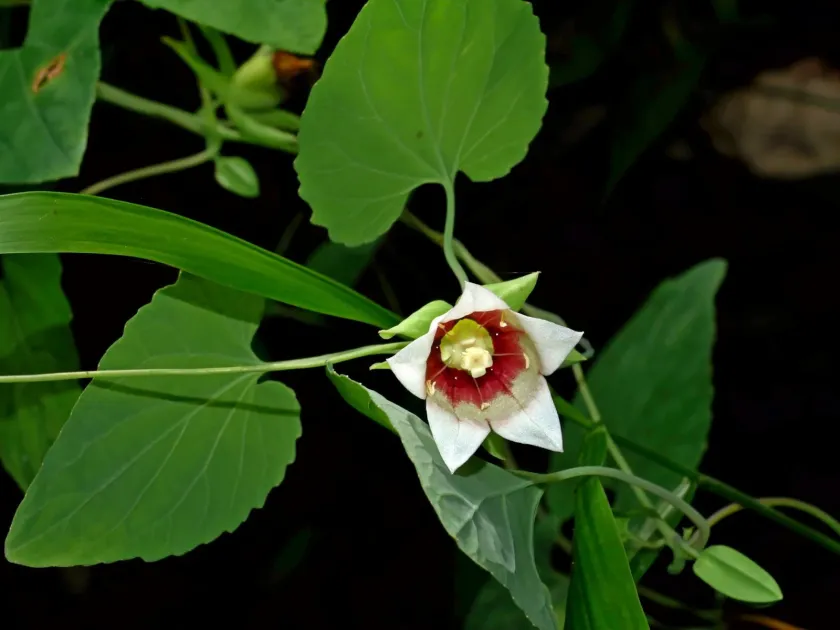
Description
Sowing dates
Sowing Codonopsis javanica seeds is typically performed in early spring once the danger of frost has passed and soil temperatures consistently reach 15–18°C.
For large-scale production, seeds are sown directly into prepared, fine-textured seedbeds or started in trays within a greenhouse to ensure higher germination rates.
Since the seeds are extremely small, they should be covered with only a very thin layer of soil or sand to allow adequate light exposure for successful germination.
Maintaining constant moisture levels during the germination phase is critical, often requiring a light misting system to prevent the soil surface from drying out.
Once seedlings reach a stage with 3–4 true leaves, they can be thinned out to a spacing of about 25–30 cm to allow room for optimal root expansion.
Growing requirements
As a member of the Campanulaceae family, Codonopsis javanica thrives in well-drained, fertile, and slightly acidic to neutral loam or sandy loam soils.
The crop prefers locations that offer full sun to partial shade, providing protection from intense afternoon heat that can scorch the foliage.
A consistent climate with moderate rainfall is ideal, as the crop is sensitive to waterlogged conditions which often lead to root rot and other fungal pathogens.
Soil preparation involves deep tilling to facilitate the growth of long, straight roots, as compaction can lead to deformed and less marketable root shapes.
Balanced fertilization, focusing on potassium for root development and phosphorus for early growth, is recommended for achieving healthy crop maturity.
Yield
The yield of Codonopsis javanica is primarily measured in the dry mass of harvested roots, which are typically ready for extraction after two to three years.
Under optimal farming conditions, the crop can produce a significant volume of roots, making it an economically viable choice for specialized herb producers.
Marketable yields depend heavily on the uniformity of the roots; therefore, thinning and proper spacing play a decisive role in the final output quality.
Beyond the roots, the plant provides secondary biomass, though its primary economic value is concentrated within the underground storage organs.
Improved cultivars and consistent irrigation schedules have shown the potential to increase total yield significantly compared to wild-harvested populations.
Main diseases and pests
Root rots caused by soil-borne fungi are the most severe threats to Codonopsis javanica, usually exacerbated by poor drainage or excessive nitrogen fertilizer.
Nematodes are another primary concern, as they cause lesions and galls on the roots, which compromise the plant's nutrient uptake and overall medicinal value.
Pests like aphids and spider mites may infest the foliage during warm, dry weather, requiring prompt attention to avoid stunted growth of the root systems.
Implementing a crop rotation strategy is essential to prevent the buildup of pathogens in the soil that specifically target this member of the Campanulaceae family.
Monitoring the moisture content of the soil and improving site ventilation can significantly reduce the risk of humidity-related foliage diseases.
Harvesting
Harvesting usually occurs in the autumn of the second or third year, specifically when the stems and leaves turn yellow and begin to naturally wither.
Mechanical harvesting requires specialized equipment designed for deep root crops to ensure the entire root is lifted without breakage or damage to the skin.
Immediately after harvest, roots must be washed thoroughly to remove debris and then trimmed of any remaining top growth to prevent contamination.
Drying is a critical step, requiring a controlled environment with good airflow and temperatures around 45–50°C to preserve heat-sensitive active compounds.
Properly dried roots should be brittle enough to snap cleanly and stored in moisture-proof containers in a cool, dark environment to maintain potency.