
Tinospora crispa
Tinospora crispa
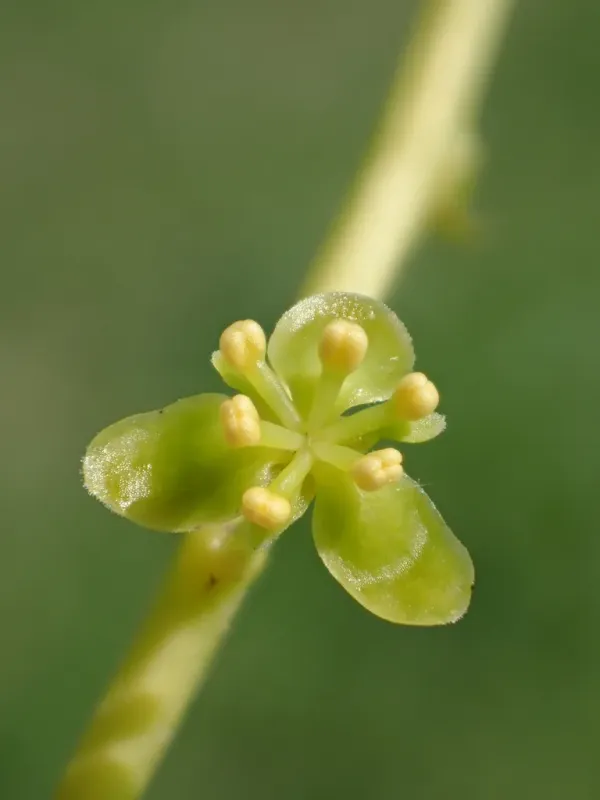
Description
Sowing dates
Tinospora crispa is a perennial medicinal vine belonging to the Menispermaceae family, native to tropical regions of Southeast Asia. Commercial cultivation primarily relies on stem cutting propagation, as seeds often exhibit low viability and irregular germination rates in field conditions.
Stem cuttings, approximately 20 to 30 cm in length, are selected from mature, healthy vines. These cuttings are placed in well-drained, nutrient-rich soil media to encourage root initiation. High ambient humidity and filtered light are essential during the initial stages of establishment.
Planting is ideally scheduled at the onset of the rainy season to utilize natural hydration. Providing sturdy trellises or hosting trees is crucial, as the plant is an aggressive climber that requires vertical support to reach optimal growth and air circulation.
Spacing between plants must be calculated to allow for easy access during routine maintenance and harvesting. A well-planned layout minimizes the risk of overcrowding, which can otherwise lead to increased humidity around the plant base and subsequent fungal outbreaks.
The plant is distinguished by its warty, tuberculated stems, which serve as a defining botanical characteristic. These stems are the primary source of the plant's valuable phytochemicals, making the structural integrity of the vines a key focus for agricultural management.
Growing requirements
This species is strictly tropical, thriving in temperature ranges between +24°C and +32°C. It is highly intolerant to frost and cold drafts; prolonged exposure to temperatures below +15°C can cause severe physiological stress and potentially terminal damage to the vine's vascular system.
Optimal growth occurs in fertile, loamy soils that possess excellent drainage capacity. While Tinospora crispa requires significant moisture, it cannot withstand waterlogging. Soil aeration is critical to prevent root rot, which is a common threat in poorly drained substrates.
Light management is nuanced: while mature vines tolerate direct sunlight, juvenile plants prefer semi-shaded environments. Maintaining the balance of light exposure is necessary to ensure the continuous accumulation of bitterness-inducing alkaloids in the stems.
Regular irrigation is vital, particularly during the dry season. Micro-irrigation systems are often preferred in large-scale operations to maintain consistent soil moisture levels and provide the necessary air humidity that supports the plant’s lush vegetative growth.
Fertilization should be handled with care, focusing on organic amendments like compost or seaweed extracts applied during the active growth phase. Over-fertilization with synthetic nitrogen should be avoided to prevent weak stem growth, which can reduce the quality of the raw material.
Harvesting
The harvest cycle for Tinospora crispa typically commences after 2 to 3 years of growth, once the stems have developed sufficient thickness and concentrated secondary metabolites. Harvesting involves the selective removal of mature stems while preserving the root system.
Post-harvest processing requires immediate cleaning of the stems and removing the leaf litter. The stems are then cut into manageable sections and dried in well-ventilated, shaded facilities to ensure that volatile active compounds are preserved at their peak concentrations.
Storage of the dried product must be performed in moisture-proof, light-protected containers. Proper storage prevents degradation caused by humidity or biological pests, ensuring a long shelf life for the pharmaceutical-grade raw material.
The demand for this vine is driven by the herbal medicine industry, where its extracts are valued for their anti-inflammatory and immunomodulatory properties. Consequently, standardization of harvest protocols is essential for meeting the quality control requirements of buyers.
Properly managed plants demonstrate strong regenerative capabilities after pruning, allowing for multiple harvests over several years. This longevity makes Tinospora crispa an economically viable crop for small-to-medium-scale agricultural enterprises in its native tropical range.