
Tillandsia minasgeraisensis
Tillandsia minasgeraisensis
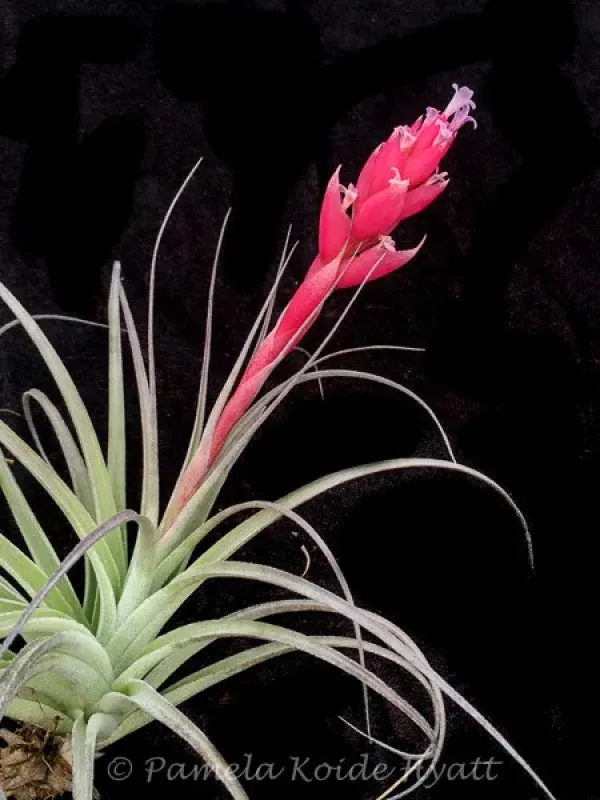
Description
Growing requirements
Tillandsia minasgeraisensis belongs to the Bromeliaceae family and is recognized as a distinctive epiphytic species. Native to the Minas Gerais region of Brazil, it naturally grows on rock faces and high-altitude tree branches, where it has evolved to thrive on moisture and nutrients absorbed directly from the atmosphere.
Cultivation requires replicating a tropical montane climate. The plant thrives in bright, indirect sunlight. Prolonged exposure to intense, direct sun should be avoided to prevent desiccation and scorching of the delicate leaf trichomes that are essential for the plant's nutrient and water intake.
Humidity and ventilation are the pillars of success for this species. It does not grow in soil; instead, it needs to be attached to a piece of driftwood, cork bark, or other porous material. Air movement is critical to prevent moisture from sitting stagnant in the leaf rosettes, which could trigger decay.
Watering is conducted via misting with soft, room-temperature water. During the warmer growing season, the plant should be misted daily or soaked briefly once a week. In the winter months, the watering frequency must be reduced to avoid over-saturation, as lower light levels slow down the plant's metabolism.
Temperature control is crucial for the health of Tillandsia minasgeraisensis. It prefers temperatures between 18°C and 26°C. Like many high-altitude bromeliads, it benefits from a natural temperature drop at night, which helps the plant recover and maintains its physiological balance throughout the year.
Main diseases and pests
The most common cause of failure in growing this species is stem rot caused by water accumulation at the base of the plant. If the plant does not dry out within a few hours after watering, the risk of fungal infection increases significantly, leading to the rapid softening and collapse of the leaves.
Scale insects are frequent pests that attach themselves to the leaves, feeding on the plant's sap. Their presence is often detected by the appearance of sticky honeydew on the leaves or the shells of the insects themselves. Manual removal is the first step in control for small infestations.
Mealybugs, characterized by white, cotton-like masses in leaf axils, are another persistent threat. These pests sap the plant's vitality. Treatment involves using insecticidal soap or a localized application of isopropyl alcohol, ensuring the entire area is treated to prevent a resurgence of the pest.
Poor water quality represents a major environmental threat. Mineral buildup from hard tap water can clog the trichomes—the tiny, scale-like structures on the leaves that function as the plant's digestive system. Over time, this leads to chlorosis and the eventual death of the specimen.
Regular monitoring of the plant's health is the best defense against disease. Any signs of discoloration, soft spots, or a foul odor at the base indicate a need for immediate intervention, which may include adjusting the watering schedule or improving the ambient airflow in the growing area.