
Tillandsia mereliana
Tillandsia mereliana
Description
Growing requirements
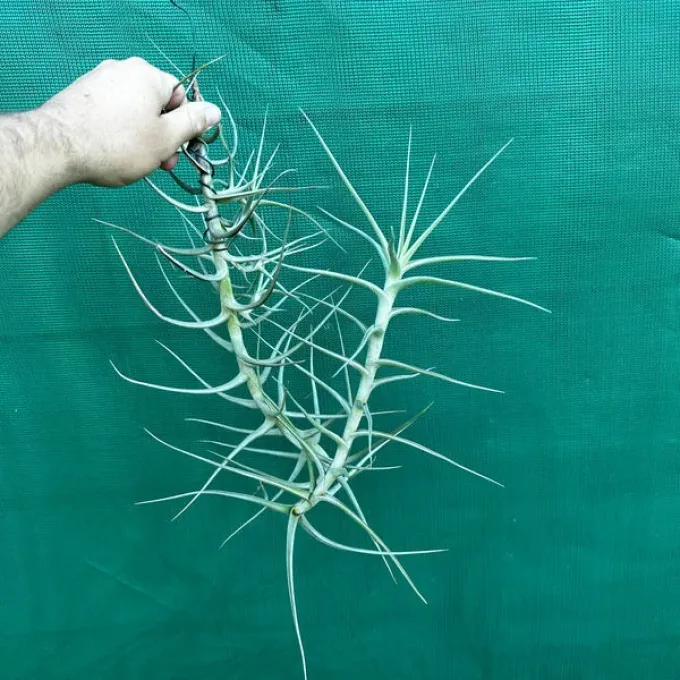
Tillandsia mereliana is a fascinating species belonging to the Bromeliaceae family. As an epiphytic plant, it naturally occurs in tropical environments where it anchors itself onto trees and rock surfaces, absorbing moisture and nutrients directly from the air through specialized structures called trichomes.
The plant features a unique physiological adaptation: its silver-colored foliage is densely covered with scales that manage water uptake and protect the plant from high-intensity solar radiation. This allows the species to survive in environments with unpredictable rainfall.
For successful growth, Tillandsia mereliana requires bright, indirect light. Direct midday sun can easily scorch the leaves and dehydrate the plant, while insufficient light leads to etiolation and a loss of the plant's characteristic compact growth habit.
The microclimate should ideally maintain temperatures between 18 and 26 degrees Celsius. Good air circulation is paramount, as it ensures that the moisture trapped within the leaves after watering evaporates promptly, preventing bacterial or fungal decay.
Regarding its substrate, this plant does not need soil. It thrives when mounted on driftwood, bark slabs, or cork. This mimics its natural habitat, allowing the roots to remain free and ensuring the plant does not sit in standing water, which is detrimental to its health.
Main diseases and pests
The primary threat to Tillandsia mereliana is rot, particularly at the base of the rosette. This usually occurs if water accumulates in the center of the plant for too long, creating an environment that favors the growth of pathogenic bacteria and fungi.
Mealybugs are the most common pests found on this species. They hide deep within the leaf axils, making them difficult to detect early. Their feeding damages the plant's structural integrity and leaves it vulnerable to secondary infections.
Scale insects can also attach to the foliage, sucking sap and causing yellowing of the leaves. If left untreated, a heavy infestation can severely weaken the plant, eventually leading to stunted development and eventual decline.
Preventative care is the best strategy. Regularly inspect the underside of leaves and ensure the plant dries completely within a few hours after any hydration process. Maintaining a clean growing environment significantly reduces the risk of pest colonization.
If an infestation occurs, manual removal with a soft brush and diluted insecticidal soap is recommended. Always avoid harsh chemical treatments that could clog the plant's trichomes and hinder its ability to absorb water and nutrients.