
Tillandsia magnusiana
Tillandsia magnusiana
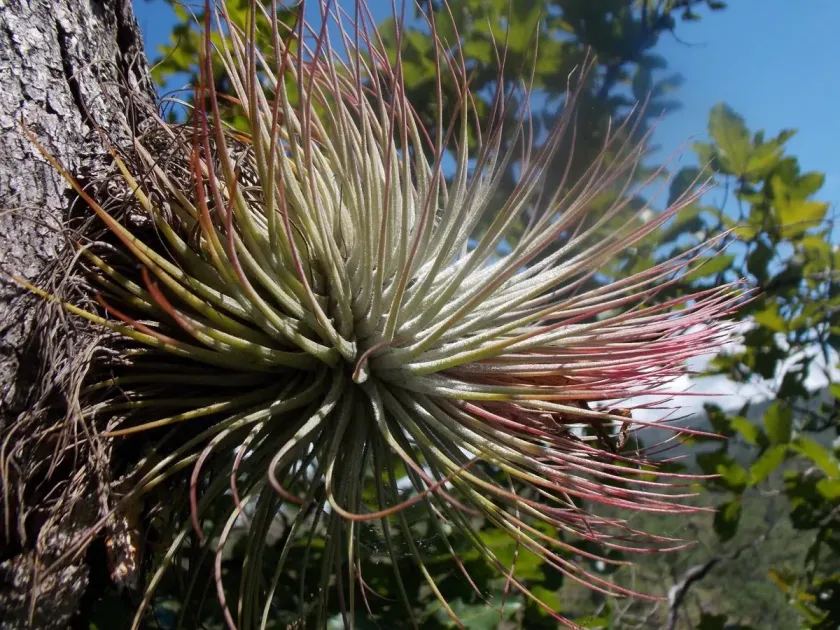
Description
Growing requirements
Tillandsia magnusiana belongs to the Bromeliaceae family and is recognized as a distinctive species of atmospheric air plant. Originating from the tropical forests of Central America, specifically Mexico and Guatemala, this plant naturally thrives as an epiphyte, anchoring itself to branches in humid environments.
The botanical architecture of the plant is centered on its silvery, trichome-covered leaves. These microscopic scales act as a highly efficient mechanism for water and nutrient absorption directly from the atmosphere, allowing the plant to survive without a conventional root system for soil extraction.
Optimal growth requires bright, filtered light to mimic the canopy levels of its native habitat. Greenhouse cultivation usually involves shading systems to prevent excessive thermal stress. A consistent temperature range between 18°C and 25°C is ideal for maintaining metabolic stability during the active growing season.
Humidity management is the core of successful cultivation. Ideally, the environment should maintain a humidity level of 60–80%. Regular misting with soft, dechlorinated water is essential for hydration. The plant should be allowed to dry completely between mistings to prevent internal moisture accumulation.
As an epiphytic species, Tillandsia magnusiana should be mounted on cork bark, driftwood, or synthetic wire frames. This method provides the necessary airflow for the base of the plant, which is vital for preventing stem rot and ensuring the plant remains healthy and disease-free.
Main diseases and pests
The primary threats to this culture are fungal and bacterial rots, which occur when moisture remains trapped in the central rosette. To avoid this, it is recommended to maintain active ventilation in the greenhouse environment, ensuring the leaves dry out within a few hours after watering.
Common pests include mealybugs and scale insects. These organisms pierce the foliage to feed on plant sap, weakening the plant and damaging its delicate appearance. Control methods include manual removal or the application of insecticidal soaps specifically formulated for delicate epiphyte tissues.
Spider mites are a significant concern if the humidity levels drop significantly. These tiny pests thrive in hot, dry conditions and can quickly compromise the plant's health. Maintaining a high-humidity microclimate is the most effective cultural practice for deterring spider mite infestations.
Hard water is another hidden threat to Tillandsia magnusiana. High mineral content, particularly calcium and magnesium, clogs the trichomes, effectively choking the plant's ability to absorb water. Using rainwater or reverse osmosis water is highly recommended to keep the foliage functioning correctly.
Regular sanitation and monitoring are critical. If any leaf area shows signs of decay or browning, it should be removed promptly using sterilized tools. Keeping the collection free of stagnant debris ensures long-term vitality for the entire plant population within the facility.