
Tillandsia leonamiana
Tillandsia leonamiana
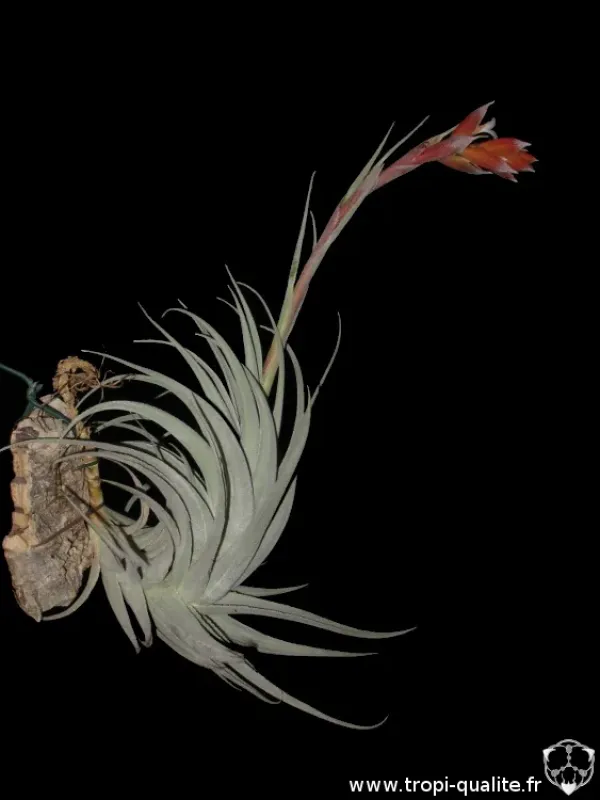
Description
Growing requirements
Tillandsia leonamiana is a fascinating species belonging to the Bromeliaceae family. As an epiphytic plant native to the tropical regions of Brazil, it has evolved to thrive on the branches of trees, utilizing its specialized foliar trichomes to absorb moisture and nutrients directly from the ambient tropical air.
Successful cultivation requires high atmospheric humidity, ideally maintained between 65% and 75%. The plant prefers a stable thermal environment with daytime temperatures ranging from 18°C to 26°C. It is essential to avoid extreme cold, as exposure to temperatures below 12°C can severely stress or kill the specimen.
Light requirements are significant but specific; the plant thrives in bright, indirect light. Direct tropical sun is detrimental and can scorch the foliage, therefore providing filtered light through sheer curtains or placing the plant in east-facing spots is recommended to maintain its health and vibrant coloration.
From an agrotechnical perspective, Tillandsia leonamiana does not require a traditional root system in soil. Instead, it should be mounted on pieces of natural cork bark, driftwood, or specialized supports that allow for excellent air circulation around the root zone, mimicking its natural ecological niche.
The irrigation protocol involves misting the entire plant with soft, deionized water or soaking the entire mount in water for approximately 15 minutes once or twice a week. Following irrigation, it is critical to ensure the central rosette is not left waterlogged to prevent rot development.
Main diseases and pests
The primary agricultural challenge for this species is the management of fungal pathogens, particularly crown rot. This condition is almost exclusively the result of poor ventilation following the irrigation process, which allows moisture to remain trapped within the tightly packed foliage for extended periods.
Pest management involves monitoring for scale insects and mealybugs, which are the most common vectors of infestation. Treatment involves the mechanical removal of pests and the application of mild, plant-safe insecticides to ensure the foliage remains pristine and the growth remains uninterrupted.