
Tillandsia latifolia
Tillandsia latifolia
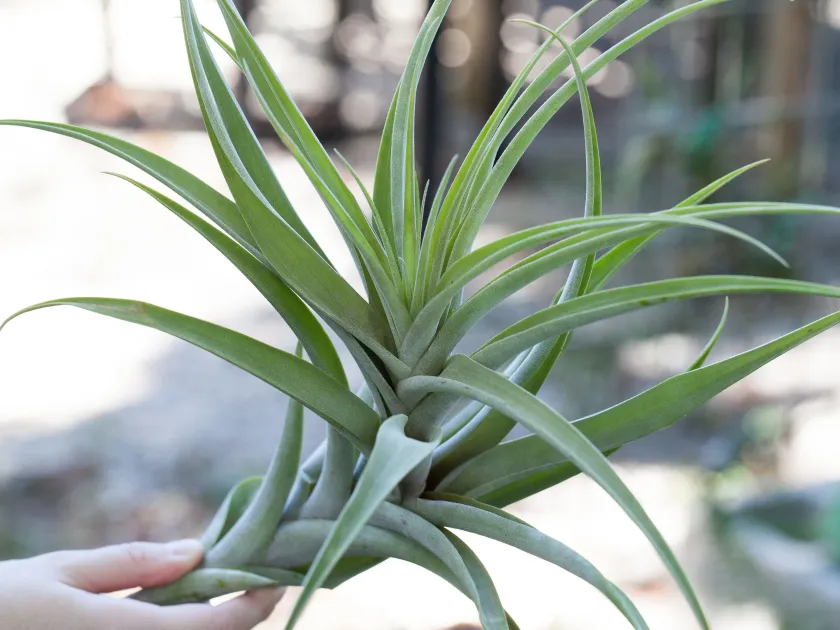
Description
Growing requirements
Tillandsia latifolia is an intriguing species within the Bromeliaceae family, widely recognized for its adaptation to arid environments in regions such as Peru. Unlike terrestrial crops, this plant thrives as an epiphyte, anchoring itself onto substrates rather than growing in soil.
The plant exhibits a rosette formation consisting of rigid, narrow leaves covered in specialized silver scales known as trichomes. These biological structures are evolutionary adaptations that allow the plant to harvest moisture and atmospheric nutrients directly from air humidity and mist.
To cultivate this species successfully, it is imperative to provide bright, indirect light conditions. Intense direct sunlight should be avoided during the peak hours of the day to prevent chlorophyll degradation and leaf scorch, which can severely damage the plant structure.
Temperature management plays a critical role in the growth cycle, with optimal performance observed between 18 and 25 degrees Celsius. Ensuring constant airflow is vital, as stagnant air often leads to a rapid increase in humidity levels that can induce decay in the plant's core.
Watering protocols should be balanced between hydration and evaporation. Misting or light soaking is recommended, but the foliage must dry out completely within several hours to prevent the development of necrotic lesions on the leaf tissue.
Main diseases and pests
Fungal diseases constitute the primary threat to Tillandsia latifolia, typically manifesting as rot when the plant is kept in excessively humid or poorly ventilated conditions. Once the rot reaches the center of the rosette, recovery becomes nearly impossible for the specimen.
Insect pests, including mealybugs and spider mites, represent a common challenge in greenhouse or indoor environments. These pests thrive in dry conditions and can cause significant sap loss, leading to the yellowing and premature death of leaves if left unmanaged.