
Tillandsia jucunda
Tillandsia jucunda
Description
Growing requirements
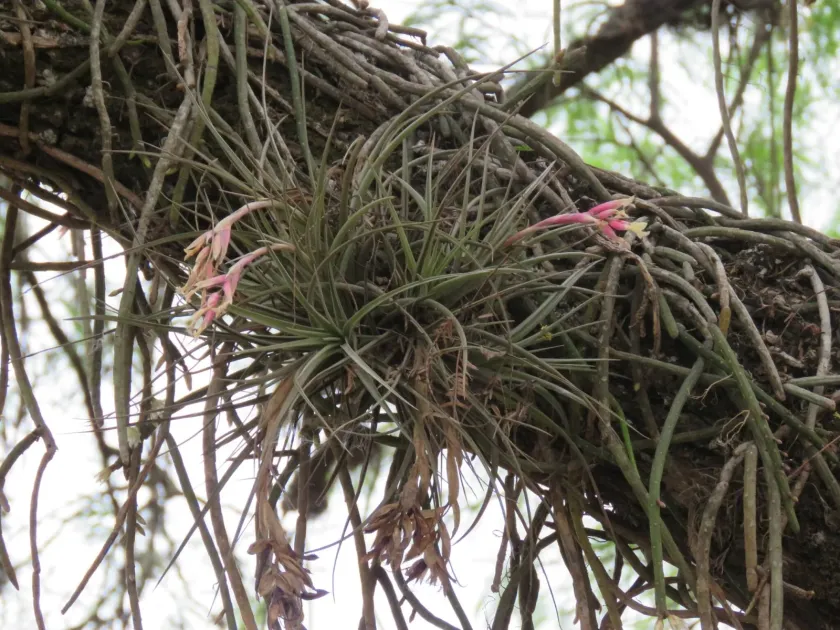
Tillandsia jucunda is a perennial epiphytic plant belonging to the Bromeliaceae family. Native to South America, specifically Argentina, it has adapted to survive in various tropical environments by anchoring itself to tree branches and rocky substrates rather than soil.
The botanical structure consists of a dense rosette of stiff, silvery-grey leaves. These leaves are densely covered in trichomes—specialized scales that absorb moisture and nutrients from the atmosphere, making the plant highly efficient in arid or nutrient-poor conditions.
For successful cultivation, T. jucunda requires bright, indirect light and high humidity levels. The ideal temperature range is between 18°C and 25°C. Proper airflow is essential, as the plant needs to dry out relatively quickly after hydration to prevent physiological stress.
Agrotechnical practices involve mounting the plant on wood, cork bark, or other porous materials. Unlike terrestrial crops, irrigation is performed by misting or soaking the plant, ensuring that water does not remain trapped in the center of the rosette for extended periods.
In ornamental horticulture, Tillandsia jucunda is highly valued for its architectural shape and low-maintenance requirements. It is widely used in interior decoration, living walls, and small-scale terrariums where soil-free greenery is desired.
Main diseases and pests
The primary threat to Tillandsia jucunda is fungal rot caused by water stagnation in the leaf axils. This typically occurs in poorly ventilated areas or when temperatures drop significantly, preventing the plant from drying out naturally.
Common pests include mealybugs and scale insects. These pests feed on the sap of the plant and often hide within the tight spaces of the leaf rosette, making them difficult to detect until an infestation becomes severe.
Spider mites can also pose a problem, particularly in environments with very low relative humidity. Infestation symptoms include pale spots on the foliage and a fine, silken webbing that covers the surface of the leaves.
The use of mineral-heavy water can clog the plant's trichomes, effectively choking its ability to absorb moisture. Over time, this leads to mineral accumulation, resulting in leaf discoloration and stunted growth.
Maintenance should include periodic rinsing with pure, soft water to remove dust and prevent salt buildup. If chemical treatments are necessary, they should be applied at diluted rates to avoid damaging the sensitive surface scales of the plant.