
Tillandsia humilis
Tillandsia humilis
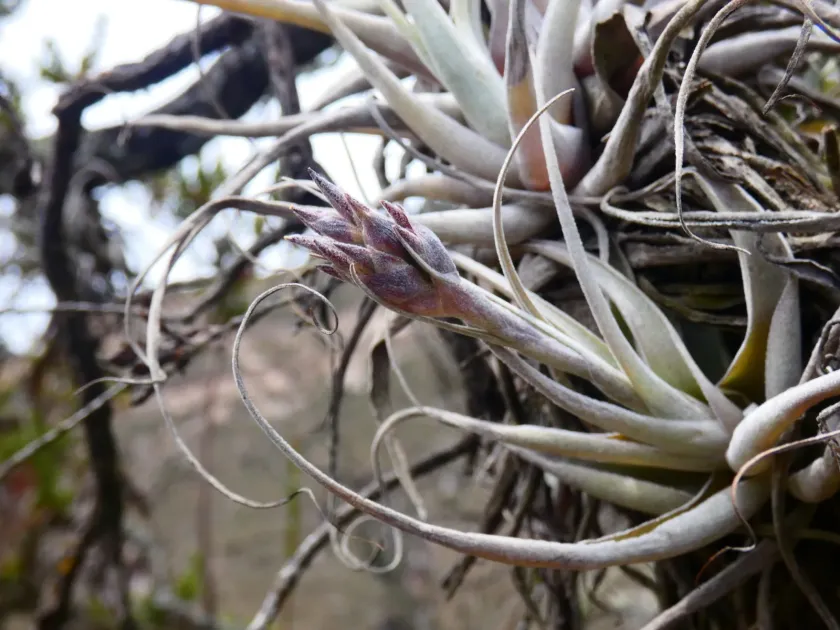
Description
Growing requirements
Tillandsia humilis is a distinctive member of the Bromeliaceae family. As an epiphyte, it lacks a conventional root system designed for soil nutrient uptake, instead utilizing specialized structures called trichomes on its foliage to absorb moisture and mineral particles directly from the air.
The species originates from the high-altitude regions of South America, primarily within Peru and Ecuador. Its natural habitat is characterized by rocky environments and sparse vegetation, where the plant thrives on cliff faces exposed to high solar radiation and significant nocturnal temperature drops.
Successful cultivation requires a stable microclimate that mimics the alpine conditions of its origin. A high light intensity is essential, yet it must be diffused to prevent leaf scorching; therefore, greenhouses or indoor spaces with controlled shading are ideal for commercial production.
Humidity management is the most critical aspect of the plant's agrotechnics. Ideally, ambient humidity should be maintained at 60% or higher. Regular misting with filtered, room-temperature water is recommended to ensure the plant maintains its turgor pressure and metabolic activity.
Substrate requirements are minimal as the plant is an epiphyte. It is typically mounted on driftwood, bark, or grown in inert porous materials that provide adequate aeration for the basal area, preventing suffocation and ensuring that excess water drains away from the center of the rosette.
Main diseases and pests
The primary pests affecting Tillandsia humilis are mealybugs and scale insects. These organisms thrive in environments with poor air circulation, and their infestation can cause severe stunted growth and chlorosis if not managed through manual removal or biological pest control measures.
Pathogenic threats include various forms of fungal rot, predominantly affecting the crown of the plant. Overwatering combined with poor ventilation is the main cause of infection, necessitating immediate intervention by adjusting the watering schedule and applying appropriate systemic fungicides.