
Tillandsia gilliesii
Tillandsia gilliesii
Description
Growing requirements
Tillandsia gilliesii is a distinct member of the Bromeliaceae family, recognized for its xerophytic adaptations. Native to the rocky landscapes of Argentina and Bolivia, this species thrives in high-altitude environments characterized by limited rainfall and wide temperature fluctuations.
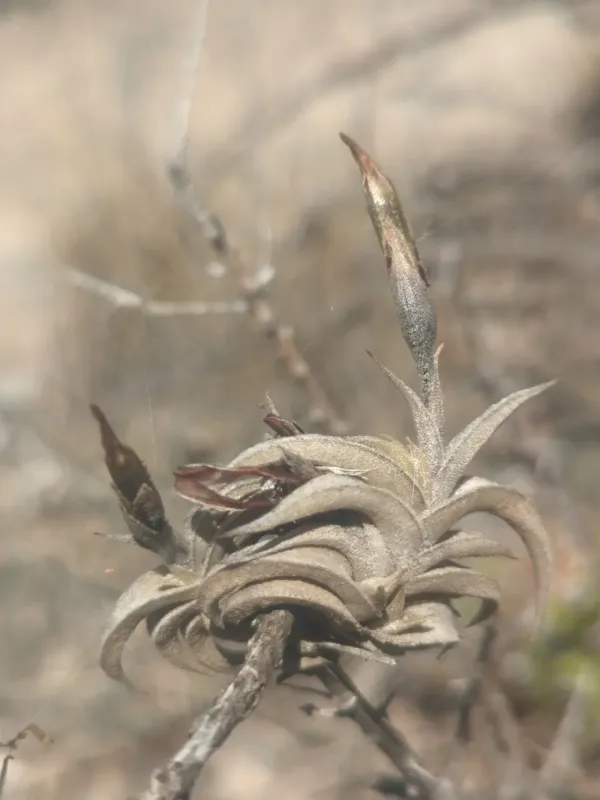
The plant possesses a compact rosette of succulent leaves covered with dense silvery trichomes. These specialized structures are essential for the plant's survival, as they efficiently capture moisture and minerals directly from the atmosphere.
Optimal cultivation requires bright, filtered sunlight. While the species is adapted to intense light, direct exposure during mid-summer may cause surface tissue damage. Proper air circulation is the most critical factor for successful greenhouse or indoor management.
The cultural substrate should strictly avoid water-holding potting mixes. Mounting the plants on driftwood, bark, or cork panels is the standard agrotechnical practice. This ensures that the root system, which serves primarily as an anchor, does not remain perpetually damp.
Watering protocols involve misting or brief immersion in mineral-poor water. After hydration, it is crucial that the plant dries within a few hours. Stagnant moisture within the leaf axils is a leading cause of physiological decline in this species.
Main diseases and pests
Pest management primarily involves monitoring for mealybugs and scale insects. These pests thrive in dry environments and can quickly infest the tight leaf bases, making manual removal or systemic treatment necessary for control.
Fungal rots, specifically Rhizoctonia or Fusarium variants, are the primary biological threats. These are almost exclusively associated with improper watering practices, where excess moisture persists in the core of the rosette during cooler night hours.
Poor ventilation can lead to the growth of superficial algae or sooty mold on the leaves. While not always lethal, this growth blocks sunlight and impairs gas exchange, leading to a significant reduction in the plant's overall vitality and growth rate.
Spider mites represent a secondary threat, particularly in highly controlled indoor climates with low relative humidity. Preventive measures include increasing local air humidity or using horticultural oils safe for bromeliads.
To ensure long-term health, growers must avoid the use of heavy chemical sprays, which can clog the delicate trichomes. Integrated pest management (IPM) using mild soaps and biological controls remains the preferred approach for this sensitive culture.