
Tillandsia filifolia
Tillandsia filifolia
Description
Growing requirements
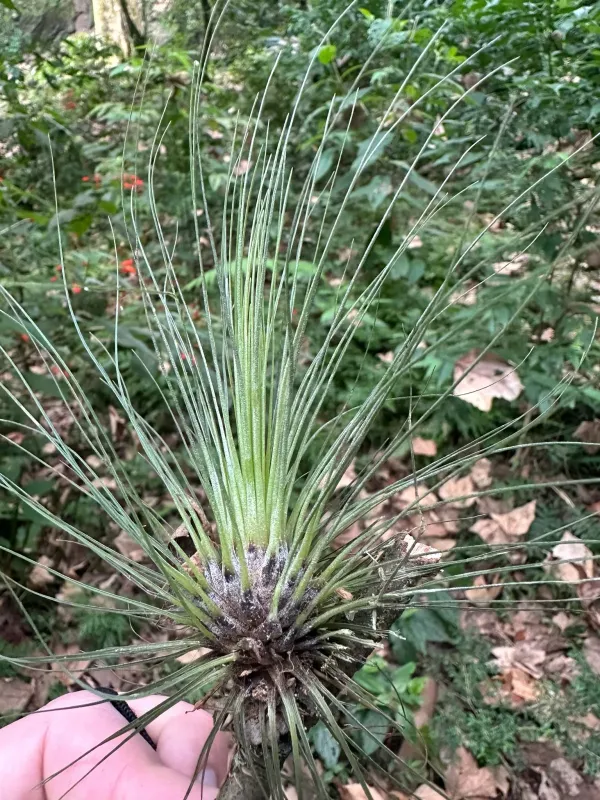
Tillandsia filifolia is a member of the Bromeliad family, native to the tropical forests of Mexico and Central America. As a classic air plant, it is an epiphyte that typically grows on the branches of trees, requiring no soil to thrive in its natural habitat.
The plant features a dense rosette of delicate, thread-like leaves. These leaves are covered with tiny, silver-grey scales called trichomes, which are specialized structures that absorb moisture and nutrients from the air and atmospheric precipitation.
Cultivation requires bright, filtered light. Exposure to direct afternoon sunlight should be avoided as it can scorch the foliage. Ideal temperatures range from 18 to 26 degrees Celsius, providing a consistent environment that mimics its tropical forest home.
High humidity is essential for this species. It is recommended to maintain humidity levels between 70% and 80%. Regular misting with soft or distilled water is necessary to keep the plant hydrated, as tap water containing high mineral content can clog the trichomes.
The main commercial application of Tillandsia filifolia is in the ornamental plant industry. Its unique, grass-like appearance makes it a popular choice for terrariums, mounting on driftwood, or as a centerpiece in indoor plant installations.
Main diseases and pests
Rot is the most significant threat to this species. If water becomes trapped in the center of the rosette and does not dry within a few hours, the base of the plant will quickly succumb to decay, which is often irreversible.
Pests such as mealybugs and scale insects can infest the plant, hiding within the tight spaces of the leaves. These pests feed on the plant's sap, leading to stunted growth and a general decline in the plant's vitality.
Fungal infections can occur when air circulation is poor. Excessive dampness combined with stagnant air provides an ideal environment for mold and pathogens to colonize the foliage of the plant.
To prevent these issues, it is crucial to ensure the plant is placed in an area with constant airflow. If an infestation occurs, gentle washing or the use of diluted, plant-safe insecticides is advised to avoid damaging the delicate foliage structure.
The accumulation of mineral deposits from hard water acts as a silent threat, blocking the plant's ability to "breathe" and absorb water. Using purified water is the best prophylactic measure for long-term health and growth.