
Tillandsia fasciculata
Tillandsia fasciculata
Description
Growing requirements
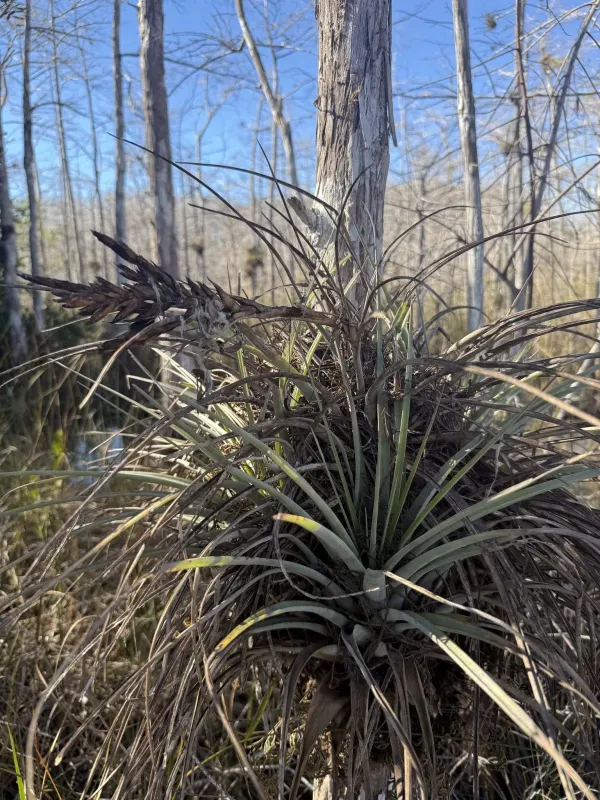
Tillandsia fasciculata is a prominent member of the Bromeliaceae family. As an epiphyte, it does not rely on soil to anchor its roots, but rather uses them to secure itself to substrates like wood, bark, or rocky surfaces in its native habitats ranging from Florida to South America.
The culture requires high atmospheric humidity, ideally maintained between 70% and 85%. Since the plant absorbs nutrients and moisture primarily through specialized leaf scales known as trichomes, environmental humidity management is the most critical factor for its successful development.
Optimal temperature conditions for growth range from 20 to 28 degrees Celsius. The species thrives in tropical climates and is highly sensitive to frost, which can cause irreversible damage to the cellular structure of its succulent-like leaves.
Proper lighting is essential for the production of the plant's hallmark colorful inflorescences. Bright, indirect light is required to stimulate flowering, while direct intense sunlight may scorch the foliage and hinder the metabolic processes needed for plant growth.
Irrigation should be performed using soft water, preferably rainwater or deionized water, to avoid mineral buildup on the leaves. A regular misting regimen or periodic immersion is necessary to maintain the plant's health throughout the vegetative cycle.
Main diseases and pests
Common pests affecting this crop include mealybugs, scale insects, and spider mites. These pests thrive in dry environments and tend to congregate within the tight spaces of the leaf rosettes, making them difficult to control without regular scouting and targeted intervention.
Fungal pathogens and bacterial rot typically arise from poor air circulation or over-watering, particularly when water is allowed to pool in the center of the rosette for extended periods. Maintaining a well-ventilated environment is essential to prevent these diseases.
- Implementing regular pest monitoring programs in greenhouse settings.
- Ensuring proper water drainage to prevent stagnant water in leaf bases.
- Applying specific horticultural oils or systemic insecticides if infestations occur.
- Maintaining optimal airflow to facilitate leaf drying after misting cycles.
- Isolating new stock to prevent the spread of pests or pathogens.