
Tillandsia diaguitensis
Tillandsia diaguitensis
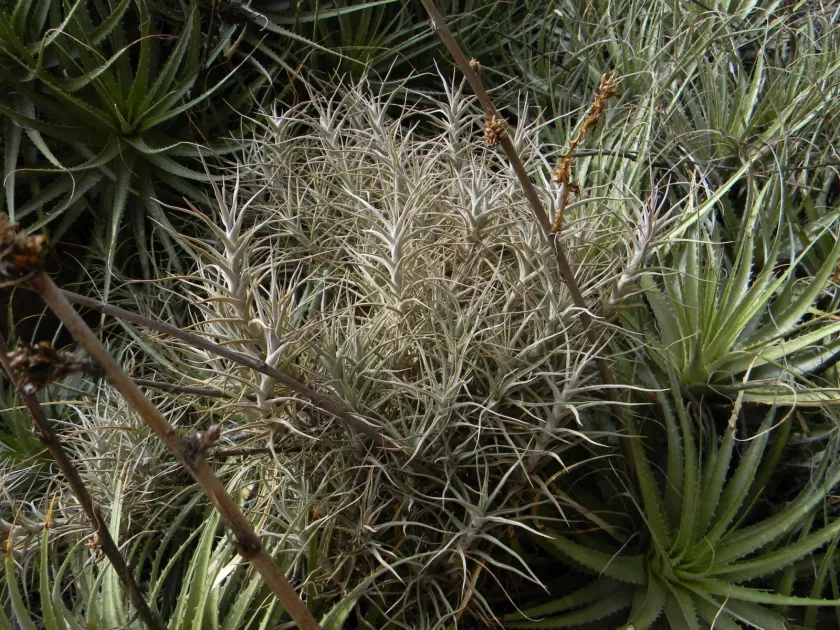
Description
Growing requirements
Tillandsia diaguitensis belongs to the Bromeliaceae family. It is an epiphytic plant that naturally grows on tree branches or rocky outcrops, absorbing moisture and nutrients from the air through specialized trichomes located on its leaves.
The plant originates from South America, specifically the northwestern regions of Argentina. Its natural habitat is characterized by an arid climate, where the species has adapted to long periods of drought through high moisture storage capacity.
For successful cultivation, it is essential to maintain high ambient humidity while ensuring excellent air circulation. Water stagnation within the leaf axils must be avoided at all costs, as it rapidly causes decay of the root system and the central rosette.
This species prefers bright, indirect sunlight. Direct sunlight during peak hours can cause leaf scorching, so placing the plant in east or west-facing locations with moderate shading during the summer months is highly recommended.
The temperature should be kept moderately warm. During the active growing season, temperatures between 20°C and 25°C are ideal, while winter temperatures should be dropped to around 15°C to induce a necessary rest period for the plant.
Main diseases and pests
The primary threat to this crop is excessive moisture in the substrate or the base of the rosette, which promotes the development of fungal rot. Poor ventilation in the growing environment also contributes to the growth of mold on the leaf surfaces.
Common pests include mealybugs, which hide in the tight axils of the leaves. Additionally, infestation by scale insects and spider mites is possible if the humidity levels in the environment remain critically low for an extended period.