
Tillandsia castellanii
Tillandsia castellanii
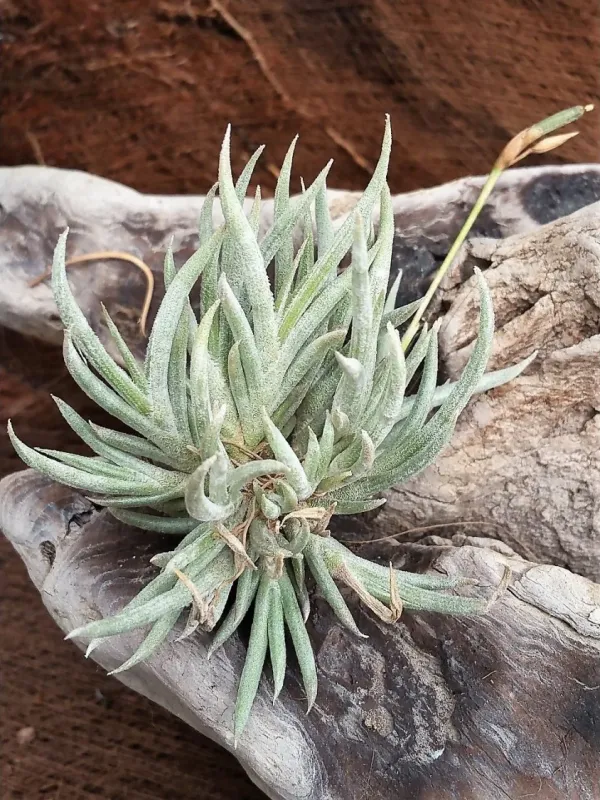
Description
Growing requirements
Tillandsia castellanii is an interesting member of the Bromeliaceae family, known for its status as an atmospheric epiphyte. Native to the tropical regions of South America, specifically Brazil, these plants do not require soil to thrive, as they have evolved to grow on trees and rocks in their natural environment.
The plant features a rosette of narrow, rigid leaves densely covered with trichomes. These specialized structures are essential for the plant's survival, as they absorb moisture and nutrients directly from the air, making the species highly adapted to environments where water availability is intermittent.
Cultivation requirements focus on maintaining high humidity combined with constant airflow. In an agricultural or horticultural setting, the plants are typically mounted on inert substrates such as driftwood or cork bark to ensure that the base of the rosette remains dry, preventing rot.
Optimal growth temperatures for this species range from 18°C to 25°C. Exposure to direct sunlight should be avoided to prevent tissue damage, while moderate, filtered light is preferred to stimulate healthy development and maintain the plant's characteristic silvery-green appearance.
The primary economic use of this culture lies in the decorative horticulture sector. It is highly valued for vertical gardens, terrariums, and botanical displays, offering a sustainable and aesthetic solution for interior design projects that prioritize unique, low-maintenance ornamental species.
Main diseases and pests
The most common threats to Tillandsia castellanii involve fungal infections, which are primarily caused by overwatering or poor ventilation. If water remains trapped in the center of the leaf rosette for extended periods, it frequently leads to stem rot, which can be fatal to the plant.
Pests such as mealybugs and scale insects represent the main biological threats. These pests often congregate in the dense leaf bases, making them difficult to spot until the plant begins to show signs of decline, such as yellowing or stunted growth.
Management of these pests requires careful application of insecticides, avoiding oils or heavy surfactants that could clog the trichomes. Manual removal is often effective when the infestation is detected early through diligent regular inspections of the plant stock.
Environmental stress, particularly caused by insufficient light levels, makes the plants significantly more susceptible to opportunistic pathogens. A weakened plant is unable to sustain its metabolic functions, leading to a breakdown of its natural defense mechanisms.
Maintaining a clean growing environment and ensuring proper air circulation are the best prophylactic strategies against disease. Monitoring the overall hydration status of the leaves helps in early detection of stress, allowing for adjustments in care before severe issues develop.