
Tillandsia buchlohii
Tillandsia buchlohii
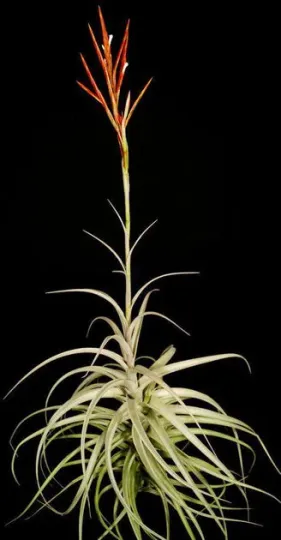
Description
Growing requirements
Tillandsia buchlohii is a fascinating member of the Bromeliad family, classified as an obligate epiphyte. Naturally occurring in the high-altitude cloud forests of Bolivia, this species thrives in environments where it anchors onto tree branches, absorbing moisture through its specialized foliar trichomes.
The primary environmental requirement is high atmospheric humidity, ideally maintained between 70% and 80%. Proper air circulation is mandatory to prevent stagnant water from accumulating in the leaf rosettes, which otherwise leads to rapid tissue decay.
Temperature management should mimic its native mountain climate, requiring a diurnal range of 22–25°C during the day and a cooler 15–18°C at night. This thermoperiodicity is essential for the plant's metabolic health and long-term development.
Growing media is unnecessary for this species as it is an epiphyte. Instead, growers should utilize supports such as cork bark, hardwood blocks, or driftwood. These substrates allow for secure attachment without compromising the plant's sensitivity to waterlogged conditions.
Light intensity should be high but diffused. Bright, indirect light is necessary for healthy photosynthesis and coloration. During the peak of summer, greenhouse shading systems are required to prevent leaf scorch and dehydration of the delicate leaf structures.
Main diseases and pests
Fungal infections are the most common threat to Tillandsia buchlohii, especially when the plant is kept in environments with poor ventilation or high humidity combined with low temperatures. Symptoms typically appear as dark, mushy spots at the base of the leaves.
Mealybugs are the most prevalent pest, often hiding deep within the leaf axils where they are difficult to reach with standard spray treatments. Systematic monitoring is required to prevent these infestations from becoming unmanageable.
Spider mites can occur in excessively dry conditions, leading to chlorosis and general weakening of the plant. Maintaining optimal ambient humidity levels is the best non-chemical strategy to deter these pests from colonizing the foliage.
Root rot is technically a misnomer since these plants do not have traditional root systems for nutrient uptake, but they can suffer from basal rot if the mounting material stays saturated for too long. Proper drainage is the key to prevention.
Sanitation is paramount when handling Tillandsia species. All tools used for maintenance should be disinfected between plants to prevent the potential spread of pathogens. Quarantine procedures for new acquisitions are recommended to protect the existing collection.