
Tillandsia brealitoensis
Tillandsia brealitoensis
Description
Growing requirements
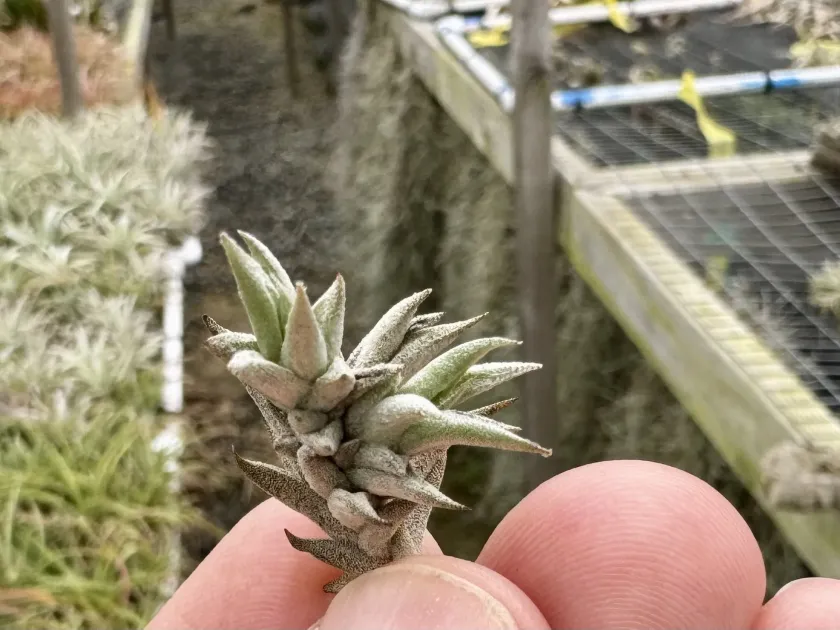
Tillandsia brealitoensis is a distinct species belonging to the Bromeliaceae family. It is a miniature epiphyte originating from the arid mountain regions of Argentina, where it thrives in challenging, high-altitude environments.
The plant is characterized by its compact, rosette-forming structure covered in silver trichomes. These specialized scales are essential for survival, as they act as a natural sponge, absorbing moisture and nutrients directly from the atmosphere.
Proper light management is critical for this species. It requires bright, indirect sunlight to maintain its structural integrity and silver coloration. Direct, intense sunlight should be avoided to prevent scorched leaves and dehydration.
Cultivation conditions must mimic its natural habitat, emphasizing good air circulation and moderate temperatures. The plant does not tolerate waterlogging, so it is imperative that the plant dries out completely between misting sessions.
As an aerophyte, it does not require traditional soil. Instead, it should be mounted on inert materials such as cork bark, wood, or stones. This allows the roots to serve as anchors while the leaves perform the primary work of hydration.
Main diseases and pests
The most common threat to Tillandsia brealitoensis is fungal rot resulting from poor cultural practices. Excessive moisture trapped at the base of the leaves provides an ideal breeding ground for pathogens that cause rapid decay.
Pests such as mealybugs are frequent intruders, often finding shelter within the dense foliage of the rosette. Their feeding damage not only weakens the plant but also leaves it susceptible to various viral and bacterial infections.
Spider mites represent a significant risk, particularly during periods of low ambient humidity. These pests thrive in dry conditions and can cause the silver trichomes to lose their luster, significantly affecting the plant's health.
Maintaining proper hygiene is essential to prevent infestations. Regularly inspecting the rosette and ensuring proper ventilation can mitigate the risk of pest outbreaks and minimize the need for chemical intervention.
If chemical treatments are necessary, it is vital to choose products formulated for epiphytes. Harsh substances can damage the delicate leaf surface and inhibit the plant's natural ability to absorb nutrients and water from the air.