
Tillandsia boliviana
Tillandsia boliviana
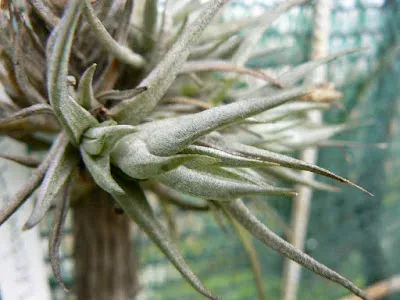
Description
Growing requirements
Tillandsia boliviana belongs to the Bromeliaceae family and is a typical epiphyte. In its natural habitat, it grows in the tropical forests of Bolivia and surrounding regions of South America, anchoring itself to tree trunks and branches.
Biologically, the plant is a perennial herbaceous crop with narrow, often scaly leaves capable of absorbing moisture and nutrients directly from the surrounding air.
This species requires high humidity (above 60%) and stable temperatures ranging from +18 to +25 degrees Celsius. Diffused light is essential, as direct sunlight can cause significant damage to the leaf tissues.
Since it is an epiphyte, this plant is not grown in traditional soil. It is usually mounted on driftwood, pine bark slabs, or hanging structures that ensure unrestricted airflow to the root system.
Care involves regular misting with soft, filtered water or soaking the plant for 15–20 minutes once or twice a week, depending on how quickly the substrate dries out.
Main diseases and pests
The primary pests for this species include scale insects, mealybugs, and spider mites, which typically infest the plant when humidity levels are consistently mismanaged.
Water stagnation in the leaf axils or inadequate ventilation can lead to the development of fungal rot, which can quickly cause the death of the epiphyte.
It is crucial to regularly inspect the lower parts of the rosettes, where insects often congregate, hindering normal photosynthesis.
To prevent pest outbreaks, it is recommended to maintain cleanliness in the growing area and avoid overcrowding of plant specimens.
Upon initial signs of disease, treatment with specialized biological products is necessary, as Tillandsia species are highly sensitive to harsh chemical treatments.