
Tillandsia barclayana
Tillandsia barclayana
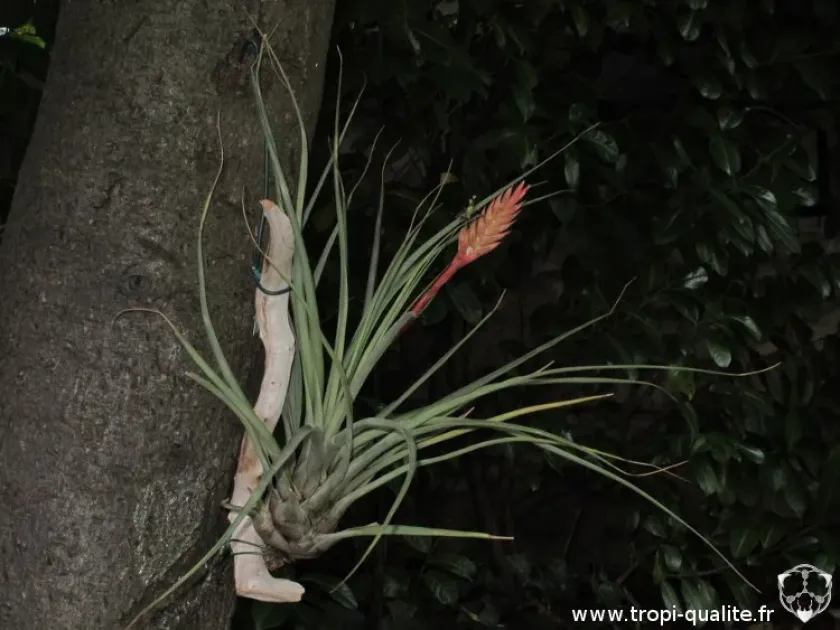
Description
Growing requirements
Tillandsia barclayana is a fascinating member of the Bromeliaceae family. As an epiphyte, it naturally grows on trees or rocky cliffs, obtaining moisture and nutrients directly from the air through specialized scales called trichomes.
Its native distribution includes the tropical regions of South America, specifically Ecuador and Peru. The plant thrives in environments characterized by high humidity levels and a consistent cycle of precipitation and mist.
For successful cultivation, Tillandsia barclayana requires bright, filtered light. Exposure to intense, direct sunlight should be avoided, as it can cause significant stress and leaf dehydration, leading to stunted growth.
Temperature management is vital, with an ideal range between 18 and 25 degrees Celsius. Ensuring excellent air circulation is also critical to prevent moisture from stagnating within the leaf rosette, which could lead to physiological disorders.
Watering is performed by misting the entire plant with soft, room-temperature water. Since the roots are primarily for anchorage, the foliar absorption is the main pathway for nutrient uptake, requiring frequent but moderate hydration.
Main diseases and pests
Fungal infections are the most common threat, usually triggered by poor ventilation and excess moisture remaining in the leaf axils for extended periods. This often leads to crown rot, which is difficult to treat once established.
Mealybugs and scale insects represent the most significant pest risks. These insects colonize the base of the leaves, drawing sap and weakening the plant's structural integrity, often leaving behind sticky residues.
Spider mites can appear if the ambient humidity drops significantly. These pests cause yellowing and necrosis of the foliage, significantly reducing the decorative and physiological potential of the specimen.
Preventive measures include regular inspection of the plant's core and maintaining a balanced microclimate. Removing any dead leaf tissue and ensuring the plant dries out appropriately between mistings are essential strategies.
When infestation occurs, manual removal or the application of specialized horticultural oils and systemic insecticides is recommended. Care must be taken to ensure the chemicals are safe for delicate bromeliad foliage.