
Tillandsia bandensis
Tillandsia bandensis
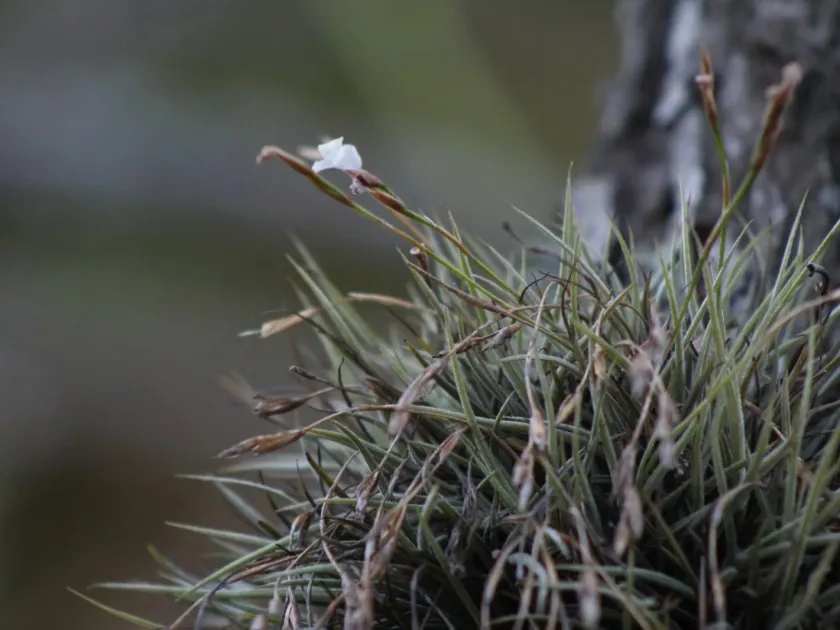
Description
Growing requirements
Tillandsia bandensis is a fascinating perennial epiphyte belonging to the Bromeliad family. Originating from South America, specifically regions in Argentina, Bolivia, and Paraguay, it thrives in environments that require high adaptability to fluctuating humidity levels.
Botanically, this species is defined by its small, compact rosette of leaves densely covered with trichomes. These specialized scales are essential for survival, as they function as microscopic sponges that capture water and dust particles from the atmosphere.
To ensure optimal health, the plant requires bright, indirect light and excellent air circulation. Unlike terrestrial crops, it does not use a traditional soil root system to obtain nutrients, making it ideal for vertical gardening and specialized displays.
Agricultural techniques for this plant focus on misting frequency and water quality. It is crucial to use soft, non-mineralized water to avoid clogging the trichomes. Maintaining a moderate climate is essential, with warm daytime temperatures and cooler nights.
Economically, Tillandsia bandensis serves a niche market in decorative horticulture. It is highly sought after for terrarium designs, architectural installations, and as a collector's item due to its unique silver aesthetic and pleasant floral fragrance.
Main diseases and pests
Major phytosanitary risks include fungal and bacterial crown rot, typically caused by water logging the plant's core. Maintaining a dry base and ensuring that the plant dries completely after hydration is the primary method of disease prevention.
Key pests include mealybugs and spider mites, which thrive in stagnant, dry conditions. These insects can quickly colonize the tight leaf axils, necessitating systematic inspection and careful application of horticultural soaps to prevent damage.