
Tillandsia balbisiana
Tillandsia balbisiana
Description
Growing requirements
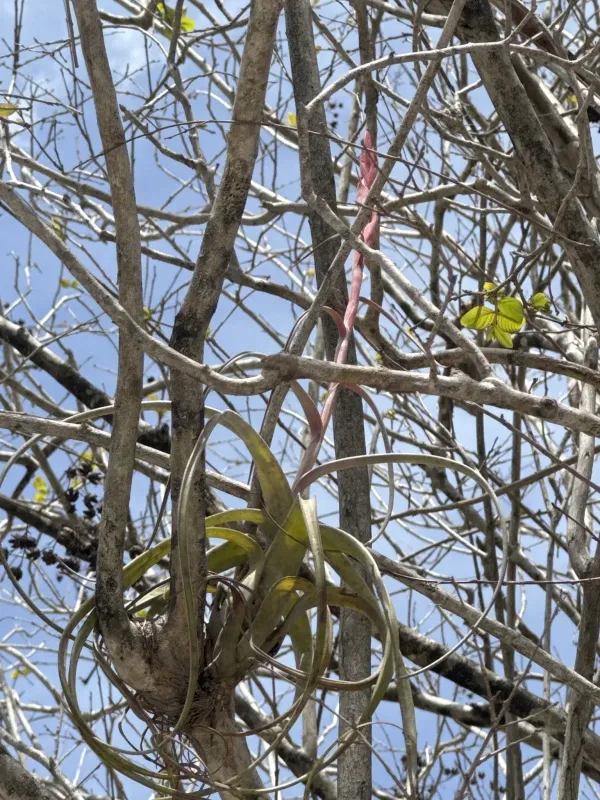
Tillandsia balbisiana is a remarkable species of perennial plant belonging to the Bromeliaceae family. As an epiphyte, it naturally grows on the bark of trees in tropical environments rather than in soil, utilizing its roots purely as an anchor mechanism.
The native range of this species extends from Mexico through Central America and the Caribbean to southern Florida. It thrives in diverse habitats including tropical forests and coastal scrub, where it survives by capturing moisture from mist, fog, and rain through specialized scales called trichomes.
Botanically, it is recognized by its bulbous base, which transitions into long, tapering leaves. This architecture is an evolutionary adaptation that allows the plant to store water and organic debris, providing a small reservoir for survival during dry periods.
For successful cultivation, Tillandsia balbisiana requires bright, indirect light and significant air circulation. In agricultural or greenhouse settings, maintaining a relative humidity of at least 50-60% is crucial for the plant to perform efficient gas exchange and photosynthesis.
The watering regime involves misting the entire plant or soaking it briefly in soft water once or twice a week depending on the ambient temperature. It is vital to ensure that the base of the rosette is allowed to dry out relatively quickly to prevent stagnant water from causing internal rot.
Main diseases and pests
The primary pests affecting the plant include mealybugs and scale insects, which often colonize the hidden areas within the leaf base. Monitoring these areas frequently allows for early detection and removal before an infestation compromises the plant's health.
Fungal issues are typically caused by insufficient air movement combined with excessive moisture trapped in the center of the rosette. Proper ventilation is the best preventative measure to maintain the health of the plant and prevent the spread of pathogens.