
Tiliacora funifera
Tiliacora funifera
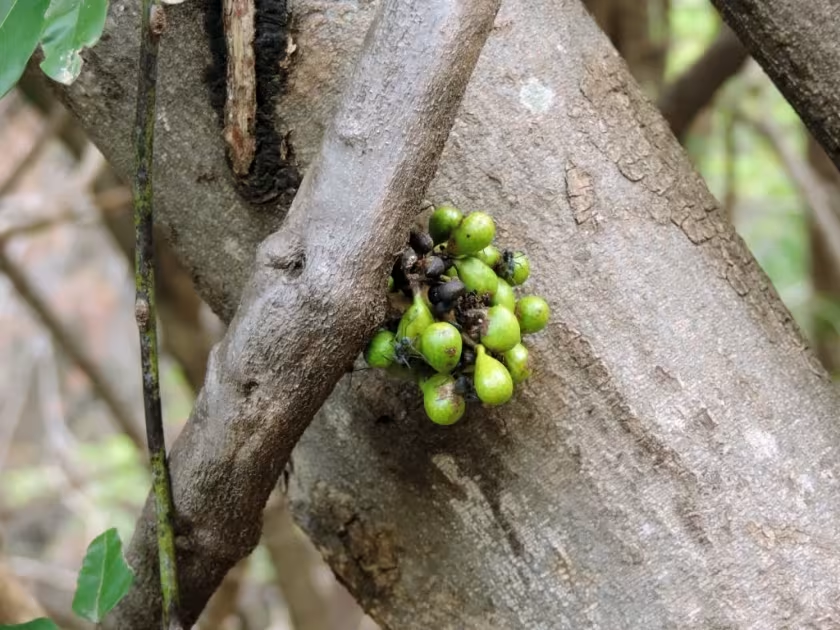
Description
Growing requirements
Tiliacora funifera is a woody climber belonging to the family Menispermaceae. Native to the tropical regions of Africa, it thrives in forest margins and dense humid habitats, showcasing a highly adaptive growth strategy common to tropical vine species.
Botanically, the plant is distinguished by its robust stems capable of climbing vertically to reach sunlight. The foliage consists of tough, leathery leaves that are well-adapted to the high moisture and competition levels found in its natural forest environment.
The climate requirements for this species include consistently high temperatures and significant annual precipitation. It does not tolerate prolonged frost or extreme cold, making it strictly a tropical or sub-tropical horticultural crop.
Regarding soil conditions, Tiliacora funifera prefers well-draining, nutrient-rich soils that retain moisture without becoming waterlogged. The addition of organic compost helps mirror the nutrient cycle of the forest floor, promoting vigorous root development.
Cultivation practices should involve the installation of sturdy trellis systems to support the climbing habit of the plant. Regular pruning is recommended to manage density and ensure proper airflow through the canopy of the vines, reducing the risk of fungal growth.
Harvesting
The primary agricultural use of Tiliacora funifera is for the extraction of bioactive alkaloids used in traditional and modern pharmaceutical preparations. The stems and leaves represent the main parts of the plant harvested for medicinal purposes.
Harvesting involves carefully selecting mature stems to ensure sustainability, allowing the remaining plant to continue its growth cycle. Sustainable management practices are essential to prevent the over-harvesting of the plant in wild populations.
Post-harvest processing requires immediate drying in shaded, well-ventilated areas to prevent fermentation. Controlled drying is crucial to preserving the chemical integrity of the active compounds found within the plant tissues.
Storage of the dried material must be conducted in dry, dark, and cool containers. Protecting the harvest from moisture and light ensures that the pharmacological activity of the plant remains stable over extended periods.
The increasing interest in natural medicine has prompted efforts to domesticate the plant in controlled agricultural settings. This ensures a reliable supply chain while protecting the biodiversity of its native tropical habitats.