
Tiliacora acuminata
Tiliacora acuminata
Description
Growing requirements
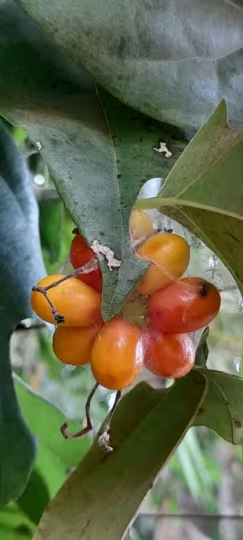
Tiliacora acuminata is a prominent woody climber belonging to the Menispermaceae family. It is recognized for its slender, resilient stems and pointed, lanceolate leaves, which possess significant biological and medicinal importance in its native regions of South Asia.
This species naturally thrives in tropical forest environments, typically found in areas with high humidity and consistent warmth. It is naturally adapted to scramble over trees, utilizing them as structural support to attain optimal light exposure in dense jungle habitats.
Agricultural success with Tiliacora acuminata depends heavily on replicating its native climate. It requires a stable temperature range between 20°C and 30°C and cannot survive in regions prone to frost or extreme temperature drops, which can lead to immediate tissue damage.
The preferred soil for cultivation is a well-draining, nutrient-rich substrate, preferably loamy in texture. Adequate soil aeration is crucial; therefore, growers often incorporate organic matter like compost to improve structure and ensure that the root system receives proper oxygenation.
Beyond its botanical interest, the plant serves an essential role in traditional medicine. Various parts of the vine are harvested for their therapeutic potential, including alkaloid-rich extracts used to support wound healing and combat various systemic inflammatory processes.
Yield
The yield of Tiliacora acuminata is primarily determined by the quality of the vertical trellis system provided. Because the plant is a vigorous climber, providing ample space and structural support significantly increases the harvestable biomass of leaves and stems.
Crop management involves strategic pruning to manage canopy density. This practice not only keeps the plant within a manageable size for harvesting but also promotes the growth of younger, more potent leaf tissue, which is preferred for extraction processes.
Optimal productivity is reached when the plant is exposed to dappled sunlight. While it can survive in deep shade, higher light levels (without being scorching) correlate with higher concentrations of secondary metabolites, making the harvest more valuable for medicinal purposes.
Harvesting strategies usually prioritize periodic collection of mature leaves. Since the vine is perennial, the plant remains productive over multiple seasons, provided that the main stem is protected and the irrigation levels remain consistent throughout the growing cycle.
Processing the harvested material requires immediate drying in controlled, low-humidity environments. This step is vital to ensure that the chemical composition remains stable, as moisture could facilitate microbial growth, thus reducing the pharmaceutical quality of the end product.