
Fiveneedle pricklyleaf
Thymophylla pentachaeta
Description
Sowing dates
Sowing should take place in the spring after the last frost has passed, ensuring the soil has had enough time to warm up for optimal germination rates.
Because the seeds of this species are small and light-dependent, they should be surface-sown and only lightly pressed into the soil rather than covered with a thick layer of earth.
If starting seeds indoors, use a well-draining seed-starting mix and maintain temperatures around 70 degrees Fahrenheit for the best results.
Transplanting should be handled with care to minimize root disturbance, as the plant can be sensitive to root damage during the initial establishment phase.
Adequate spacing is crucial for airflow; planting the individuals 8 to 10 inches apart will ensure the plants have enough space to develop their characteristic mound shape.
Growing requirements
Fiveneedle pricklyleaf (Thymophylla pentachaeta) belongs to the Asteraceae family. This low-growing herbaceous plant is widely recognized for its extreme heat tolerance and vibrant yellow bloom, making it a popular choice for xeriscaping.
Native to the southwestern United States and Mexico, this plant thrives in arid, desert-like conditions. It has evolved to survive in nutrient-poor, rocky substrates where water retention is typically very low.
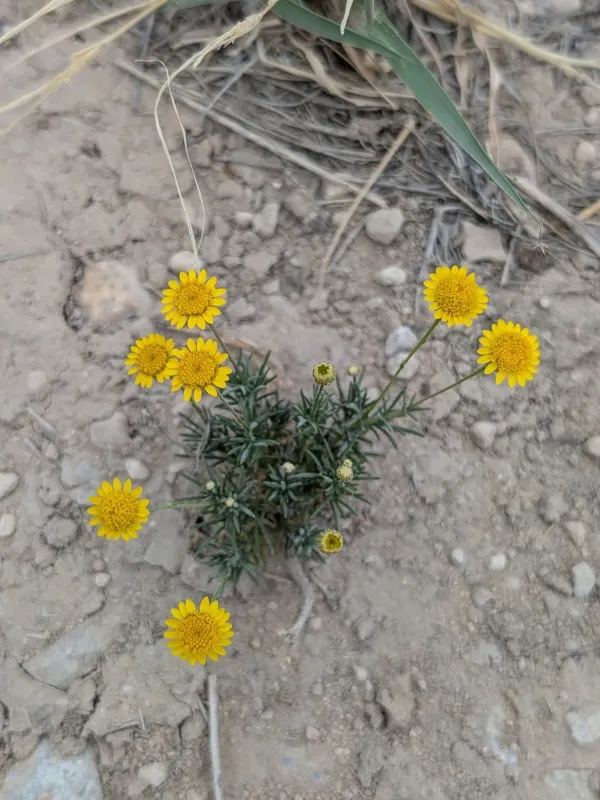
The plant features finely divided, thread-like leaves that form dense, cushion-like mounds. These mounds usually reach a modest height, rarely exceeding 8 inches, providing a unique texture to landscaping designs.
Thymophylla pentachaeta requires full sun exposure to maintain its compact growth habit and produce abundant flowers. Shade or partially shaded conditions often lead to leggy, unattractive stems and reduced flowering.
Soil requirements are straightforward: the medium must be exceptionally well-draining. Sandy or gravelly soils are ideal, as they prevent the root rot commonly associated with waterlogged environments in humid climates.
Main diseases and pests
The primary threat to this species is overwatering, which leads to fungal pathogens and various forms of crown or root rot that quickly kill the plant.
In humid regions, the plant is susceptible to powdery mildew if airflow is restricted by crowded plantings or poor garden site selection.
Occasional infestations of aphids may occur during the peak of the growing season, though they rarely pose a severe threat to established, healthy plants.
Root-knot nematodes can potentially affect the plant in sandy soils, so rotating planting sites is a recommended practice for long-term health.
Proper environmental management is the most effective pest and disease control strategy for this species, as it is naturally resistant to many common garden issues.