
Thunbergia gibsonii
Thunbergia gibsonii S. Moore
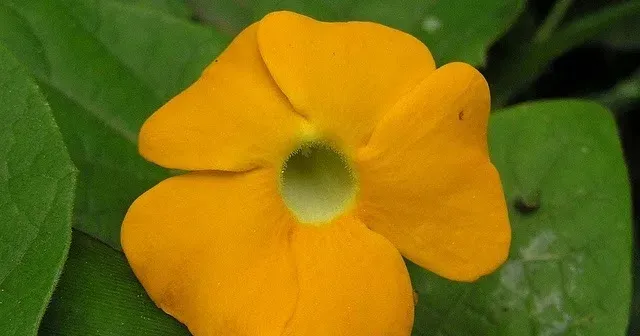
Description
Sowing dates
Thunbergia gibsonii, commonly known as Gibson's Thunbergia, is a climbing herb belonging to the Acanthaceae family. While it is perennial in its native tropical habitat, it is primarily grown as an annual in temperate agricultural zones.
For best results, seeds should be started indoors in late winter or early spring, approximately 8 to 10 weeks before the expected last frost date. Use a high-quality, sterile seed-starting mix to ensure optimal germination rates.
Seeds should be sown at a depth of about 1 cm. Maintain a consistent soil temperature of 20–22 degrees Celsius and provide bright, indirect light to prevent the seedlings from becoming leggy or weak during the early growth phase.
Transplanting to individual pots occurs once the first set of true leaves develops. This practice encourages a strong root system, which is crucial for the rapid growth phase the plant undergoes after being moved outdoors.
Hardening off the seedlings is a mandatory step before final planting. Gradually expose the plants to outdoor conditions over a two-week period to ensure they adapt well to the external environment, including variations in wind and light.
Growing requirements
This species thrives in full sun, which is essential for stimulating the development of its characteristic bright orange-red flowers. While it tolerates partial shade, flowering intensity will be significantly reduced under lower light conditions.
The soil must be fertile, well-draining, and rich in organic matter. A soil pH ranging from slightly acidic to neutral is ideal. Avoid heavy clay soils that retain excess moisture, as they can lead to root system decay.
Consistent moisture is required throughout the growing season. While the plant should not be waterlogged, the soil must be kept evenly moist to support the vigorous growth of the vines, especially in high-temperature environments.
Regular fertilization with a balanced liquid fertilizer, rich in phosphorus and potassium, should be applied every 14 days during the peak growing season to ensure continuous blooming and healthy vegetative growth.
Since Thunbergia gibsonii is a climber, providing sturdy support systems such as trellises, netting, or garden wires is necessary. Proper structural support allows the vine to cover large areas and reach its full aesthetic potential.
Main diseases and pests
The most common pests affecting this culture are spider mites and whiteflies. These pests thrive in dry environments and can quickly infest a plant, causing yellowing and stunted growth if not managed promptly.
To control pest infestations, integrate pest management (IPM) practices, including the use of targeted insecticidal soaps or systemic treatments. Regular monitoring of the foliage, particularly the undersides of leaves, is essential.
Fungal issues, such as powdery mildew, may emerge in conditions with poor airflow or excessive overhead humidity. Maintaining proper spacing between plants helps increase circulation and prevents the spread of pathogens.
Environmental stress, including sudden temperature fluctuations or over-irrigation, can compromise the plant's natural defenses. Ensuring the plant is not kept in waterlogged conditions significantly reduces the risk of root pathogens.
- Deadheading spent flowers encourages the plant to direct energy toward new growth.
- Pruning back overgrown stems can rejuvenate the plant mid-season.
- Applying mulch helps regulate soil temperature and minimize water evaporation.