
Thelesperma burridgeanum
Thelesperma burridgeanum
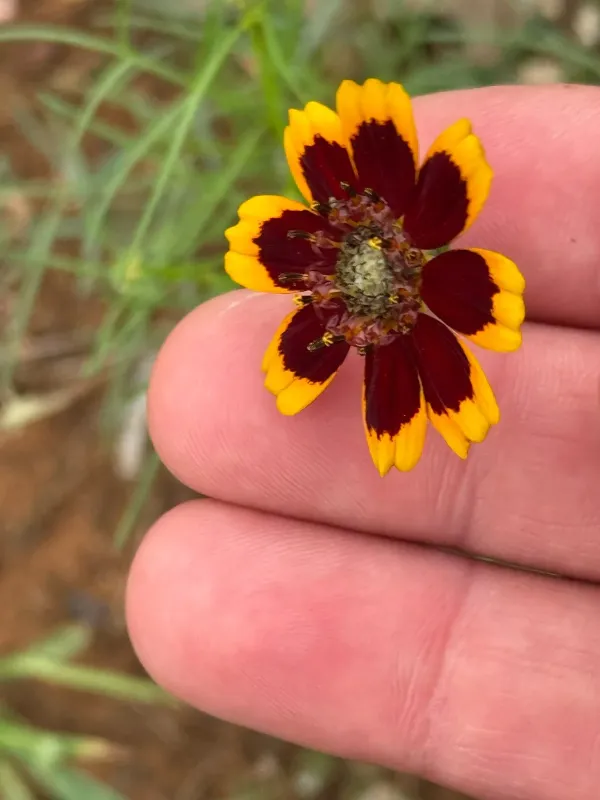
Description
Sowing dates
Thelesperma burridgeanum is a charming annual herbaceous plant belonging to the Asteraceae family. Known for its delicate foliage and long-lasting blossoms, it serves as an excellent addition to flower borders and xeriscaping projects due to its resilience.
Sowing in open ground should occur after the final spring frost has passed, typically once soil temperatures reach a comfortable range. In most regions, this corresponds to the mid-to-late spring window when the soil has successfully warmed up.
For earlier blooms, indoor propagation is highly recommended. Start the seeds in trays during the early spring, ensuring they receive adequate light, as the seeds require exposure to luminosity to successfully germinate.
The seeds are relatively small and should be sown on the surface of the growing medium without significant coverage. Pressing them lightly into the moist soil is sufficient to ensure good contact and successful sprouting.
When transplanting outdoors, provide a spacing of 20 to 30 centimeters between individual plants. This distance allows for optimal air circulation, which is essential for maintaining the health of the plant throughout the growing season.
Growing requirements
This species thrives in well-drained, slightly sandy soils. It is highly adaptable to poor soil conditions but struggles in areas where water tends to pool, making excellent drainage a top priority for successful cultivation.
Sunlight exposure is critical for the development of Thelesperma burridgeanum. It should be planted in full sun locations to ensure maximum flower production and to maintain a compact, healthy growth habit throughout the summer months.
Regarding moisture management, this plant is considered drought-tolerant once established. While regular watering is beneficial during the initial growth stages, mature plants prefer periods of drying out rather than constant saturation.
Fertilization should be kept to a minimum. An excess of nitrogen-based nutrients often results in excessive leaf growth at the expense of flower production, so a single light application of balanced fertilizer is usually sufficient.
Thelesperma burridgeanum performs best in temperatures ranging between 18 and 25 degrees Celsius. It can tolerate hot summers quite effectively, provided the root system remains stable and does not suffer from extreme moisture fluctuations.
Main diseases and pests
Powdery mildew is the most common fungal issue affecting this plant, usually triggered by high humidity levels and poor airflow. Managing plant density and removing infected debris quickly helps keep the infection at bay.
Aphids can occasionally cluster on the flower buds during their initial development. If detected early, these can be managed through mechanical removal or mild insecticidal soap applications, which are generally safe for the plant.
Root rot is a significant risk in poorly draining soils. To mitigate this threat, it is essential to prepare the planting site with adequate gravel or sand to ensure that excess water can easily escape the root zone.
Nematodes are potential subterranean pests, particularly in soils where the same crop has been grown repeatedly. Rotating planting sites every few years serves as the most effective strategy for maintaining soil health.
Spider mites might become a problem during periods of extreme heat and dry air. Maintaining clean planting areas and performing occasional misting during the hottest parts of the day can discourage these pests from settling.