
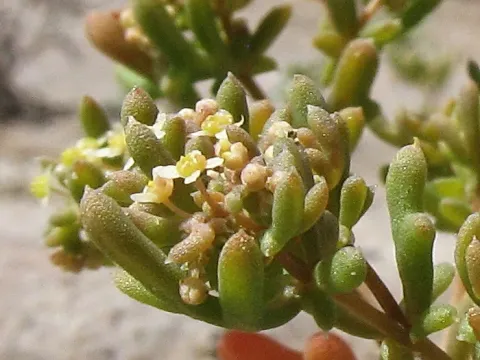
Tetradiclis
Tetradiclis
Tetradiclis is a genus of annual ephemeral plants that complete their life cycle during the short spring period. In their natural habitat, seeds germinate immediately after the spring moisture becomes available, triggered by the thawing of snow or seasonal desert rains.
What the section contains

Tetradiclis
The vegetative cycle is exceptionally brief, allowing the plant to reach maturity before the onset of intense summer heat. This strategy is an evolutionary adaptation to the harsh, moisture-limited conditions of arid regions.
For scientific or research purposes, sowing should mimic early spring conditions. The substrate must be sandy or loamy and well-drained to prevent the seeds from decaying before germination begins.
Seeding depth should be kept shallow, as small seeds lack the energetic reserves to penetrate deep soil layers. Proper surface contact with the soil is vital for successful moisture absorption.
Management of sowing timing is crucial; sowing too late risks exposing the sensitive seedlings to high temperatures, which often leads to the premature cessation of growth and limited biomass production.
Tetradiclis belongs to the Nitrariaceae family and is a specialized halophyte. It thrives in soils with high salinity levels where few other plants can survive, demonstrating remarkable physiological tolerance to salt stress.
The soil requirements prioritize excellent drainage and low organic matter density. Heavy, compacted soils are detrimental to root health, as they limit oxygen availability and hinder the rapid development required for an ephemeral lifecycle.
Climatic conditions should feature high light intensity and long daylight hours. The plant is heliophilic and requires full sun to maximize its photosynthetic capacity during its limited window of growth.
Temperature fluctuations are a standard requirement for this species. Moderate daytime temperatures combined with cooler nights provide the necessary conditions for metabolic processes and successful reproduction.
The plant does not require high levels of soil nutrients. It is adapted to nutrient-poor, saline desert substrates, making it an interesting subject for studies on soil restoration and halophytic vegetation dynamics.
The primary threats to Tetradiclis involve the loss of its natural desert habitat through landscape modification and unsustainable land use. Physical disturbance to the soil surface can easily eliminate existing seed banks.
Fungal pathogens represent the most significant biological threat, particularly in artificial settings where soil aeration is insufficient. Root decay is the most common result of improper irrigation practices.
While the plant is naturally resistant to most insect herbivores due to its high salt content, it remains vulnerable to opportunistic pathogens when placed under physiological stress from drought or waterlogging.
Competition from more aggressive, non-halophytic plant species can pose a threat if the soil salinity levels decrease due to external environmental factors. In such cases, Tetradiclis may be outcompeted by more resilient, faster-growing vegetation.
Monitoring the ecological stability of areas where this plant is present is essential for its conservation, as the species is sensitive to changes in the delicate chemical balance of its native desert soils.