
Tetradiclis tenella
Tetradiclis tenella
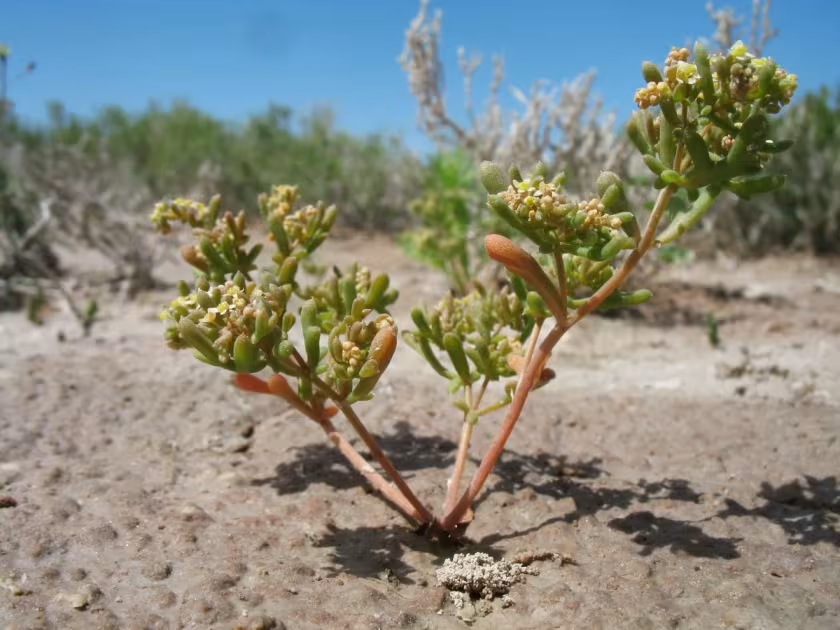
Description
Growing requirements
Tetradiclis tenella belongs to the Nitrariaceae family and is a succulent annual herb. While not a conventional crop, it is of interest to botanists and agronomists studying the flora of arid and saline regions of Central Asia and the Caucasus.
This plant is naturally distributed in semi-desert landscapes, often occupying saline soils where other plants struggle to germinate. Its evolutionary adaptation allows it to complete its life cycle during short periods of spring moisture.
Botanically, it is characterized by succulent leaves and a compact growth form. Its ability to tolerate high salinity in the soil is a key evolutionary feature, making it a pioneer species in harsh edaphic conditions.
Requirements for the environment include high solar irradiance and sufficient moisture only during the early growth stages. It is strictly adapted to dry, alkaline, and saline environments with minimal organic matter in the soil.
Agronomic management is focused on preventing the spread of this species in cultivated fields. Since it is considered a weed, management relies on deep cultivation and the use of herbicides to prevent the depletion of soil nutrients and water reserves intended for crops.
Main diseases and pests
The primary threat posed by Tetradiclis tenella to agriculture is its competition for limited moisture in desert-adjacent farming areas. Its fast growth rate allows it to suppress crops during the emergence stage.
In terms of pests, the plant is relatively resilient due to the high concentration of minerals in its tissues. Occasionally, soil-borne larvae may feed on the roots, but this rarely affects the overall population density significantly.
Diseases are mostly related to root rot fungi that occur under conditions of excessive moisture, which is generally atypical for its natural range. Viral infections are also possible but remain under-researched in this species.
Effective control methods involve integrated pest management strategies. Tillage practices that disrupt the seed bank are essential to keep the population density below the economic injury level for neighboring crops.
Chemical control remains the most effective way to eliminate infestations. Selective herbicides applied during the rosette stage provide the best results without harming the primary commercial crops.