
Montezuma cypress
Taxodium mucronatum Ten.
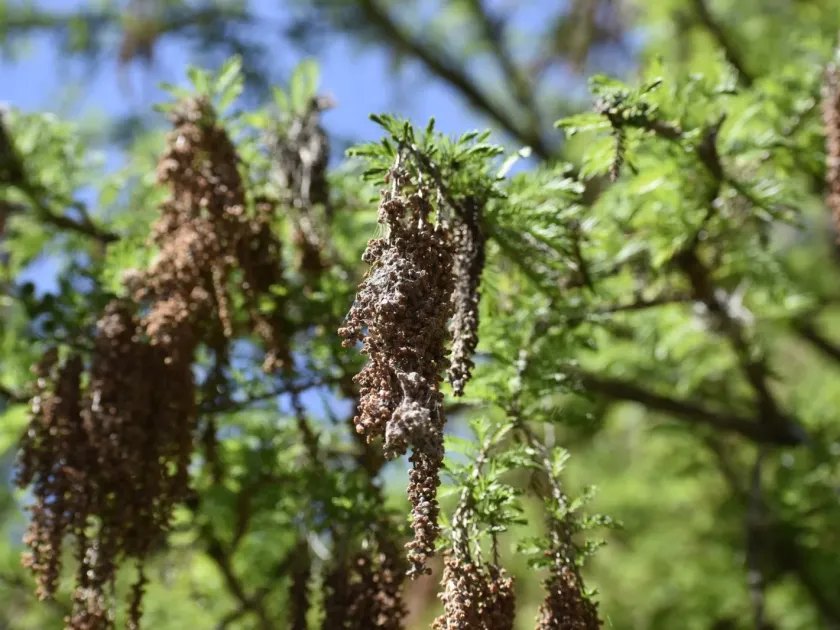
Description
Growing requirements
Taxodium mucronatum, commonly known as the Montezuma cypress, belongs to the Cupressaceae family and is recognized as one of the most massive trees in the botanical world. Unlike its temperate relatives, it tends to remain evergreen in frost-free regions.
Native to Mexico and parts of Central America, this species is naturally adapted to riparian habitats. Its range of cultivation is largely defined by its limited tolerance for freezing temperatures, requiring mild, subtropical, or warm temperate climates to thrive.
Soil requirements for this species are specific: it demands deep, nutrient-rich, and consistently moist substrates. While it can handle periodic flooding, it does not perform well in highly saline or excessively compacted, poorly aerated soils.
The tree requires full sun exposure to reach its maximum ornamental potential. Young saplings need protection from harsh winds and direct afternoon sun in extremely hot climates until their root systems are fully established.
Agricultural maintenance involves regular monitoring of moisture levels, mulching to retain root-zone humidity, and controlled fertilization during the growing season. The species exhibits a remarkable capacity for rapid vertical growth when conditions are optimal.
Main diseases and pests
The Montezuma cypress is relatively hardy but remains susceptible to specific pests, such as spider mites and aphids, particularly during prolonged periods of heat and drought when the tree is under physiological stress.
Root rot pathogens are a primary concern if the soil drainage is inadequate. Overwatering in stagnant conditions can lead to the proliferation of water-borne fungi, which damage the root system and compromise the tree's health.
Management of these threats involves proactive integrated pest management (IPM). Using targeted horticultural oils or systemic insecticides can effectively manage infestations of sucking insects before they cause significant needle discoloration.
Environmental stress, including air pollution and high concentrations of chemical salts in the soil, can significantly reduce the tree's resistance to minor infections and weaken its overall structure over time.
Regular monitoring of needle color and canopy density is the best diagnostic tool. By ensuring optimal soil aeration and avoiding physical damage to the trunk, gardeners can significantly lower the risk of common pest and disease occurrences.