
Austrian salsify
Takhtajaniantha austriaca
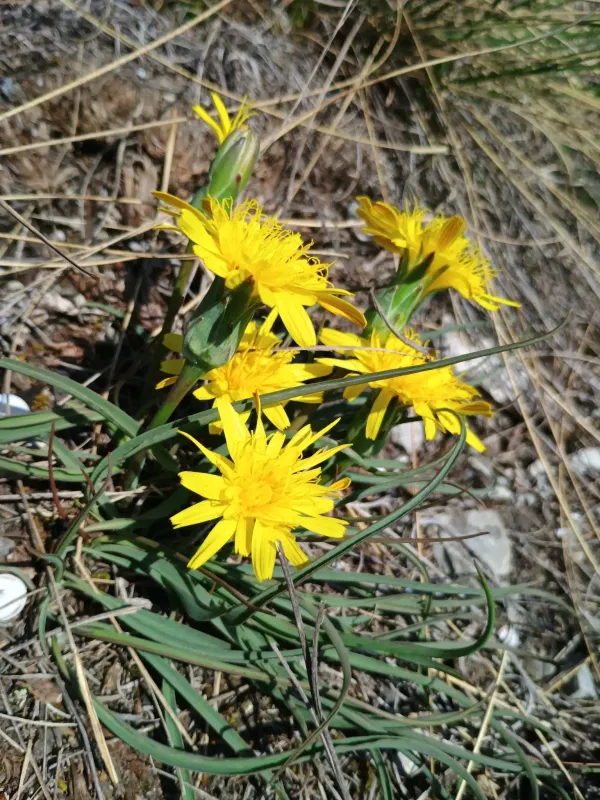
Description
Sowing dates
Sowing of Austrian salsify is generally recommended in the early spring, once soil temperatures have reached at least 8–10 degrees Celsius. This timing allows the plant to take full advantage of moisture reserves.
Winter sowing is also a viable option in many temperate regions, as the seeds undergo natural stratification, which often results in more uniform germination at the start of the following spring season.
Seed depth should be maintained between 1 and 2 centimeters. Because the seeds are relatively small, it is essential to ensure good soil-to-seed contact by rolling the field immediately after planting.
The seeding rate typically ranges from 8 to 12 kilograms per hectare for drill planting. For row cropping, this rate can be adjusted down to 6–8 kilograms depending on row spacing configurations.
Effective weed management before sowing is crucial for the success of this crop. As the seedlings are slow-growing during the establishment phase, minimizing early competition is vital for yield.
Growing requirements
A member of the Asteraceae family, Austrian salsify is a true xerophyte, well-adapted to the arid conditions of steppe and semi-arid environments. It can survive long periods of drought.
The crop prefers well-drained soils, such as black earth (chernozem) or sandy loams. It does not tolerate waterlogging, so choosing a field with appropriate elevation and drainage is critical.
The plant is highly frost-hardy and winter-resistant. It can easily withstand harsh winters, even in areas with sparse snow cover, making it a reliable perennial option for various climatic zones.
Austrian salsify requires full sunlight to thrive. Even partial shading can negatively impact the plant's growth habit, development of the root system, and overall biomass accumulation.
While the plant is hardy, the judicious use of phosphorus and potassium fertilizers can improve both yield and root vigor. Nitrogen applications should be limited to avoid excessive stem growth.
Yield
Yield potential of Austrian salsify depends significantly on the amount of annual precipitation and soil quality. In favorable years, the crop can produce substantial amounts of green fodder.
Average dry matter yields typically fall between 1.5 and 3.0 tons per hectare. Variations in management practices, such as irrigation or fertilization, can influence these figures significantly.
The plant is highly valued for its nutritional profile, particularly the high protein content in its green biomass. This makes it an excellent component for forage mixes in arid regions.
As a pasture crop, it withstands grazing well, provided that a rotational grazing system is implemented to prevent overgrazing. It recovers relatively quickly after being harvested or grazed.
Periodic spring harrowing helps to maintain yield by aeration of the soil and suppression of weeds. This cultural practice is particularly recommended for stands that are two or more years old.
Main diseases and pests
Austrian salsify is generally resistant to most common plant diseases. However, in cases of poor drainage or high humidity, powdery mildew may occasionally affect the foliage.
Insect pests such as weevils or aphids might pose a localized threat but rarely cause large-scale economic damage. The plant's natural chemical defenses provide a good level of immunity.
Root rots are the most significant risk when the plant is grown in unfavorable soil conditions. Proper site selection and crop rotation remain the primary defenses against these pathogens.
In intensive farming, nematodes could potentially become an issue, so monitoring soil health and using crop rotation strategies is advisable to maintain a healthy stand for years.
Preventive measures, including maintaining healthy plants through balanced nutrition, are usually sufficient to control threats without the need for intensive pesticide applications.
Harvesting
For hay production, the optimal harvest time is at the beginning of the flowering stage. At this time, the plant offers the best balance of biomass volume and nutrient concentration.
Harvesting should be performed at a stubble height of 6–8 centimeters. This height protects the crown and allows the plant to regenerate effectively for subsequent cuts or grazing cycles.
Seed harvesting requires careful timing because the flower heads ripen unevenly. Harvesting should begin when approximately 70–80% of the heads show signs of maturity to maximize seed recovery.
Post-harvest processing of seeds must include thorough drying to a moisture content of 12–14%. Proper storage conditions are essential to prevent mold and loss of germination viability.
Using modern machinery for direct or two-stage harvesting is recommended. Due to the tendency for seed shattering, adjusting settings to minimize mechanical damage is a key priority for farmers.