
Tacca hybrids
Tacca hybrids
Description
Growing requirements
Tacca hybrids belong to the Dioscoreaceae family and are cultivated primarily for their exceptional ornamental value. Originating from the tropical regions of Southeast Asia, these plants have been hybridized to perform better in controlled greenhouse environments and indoor settings compared to their wild counterparts.
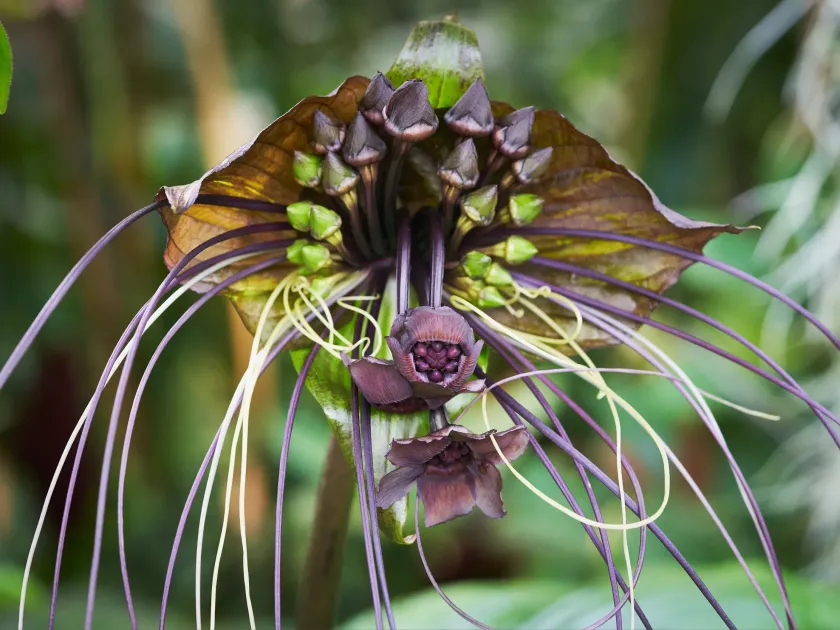
The plant is characterized by large, lush foliage and highly specialized inflorescences. The flowers are surrounded by dark, wing-like bracts and long, flowing filaments, which have led to their common names like the "bat flower" or "cat's whiskers plant," creating a unique aesthetic appearance.
To thrive, Tacca hybrids require a consistently warm environment, ideally between 22°C and 28°C. High ambient humidity is critical, and maintaining a moisture level of 70% or higher is necessary to prevent the leaves from drying out and to ensure the proper development of the exotic inflorescences.
The growing medium must be highly porous, well-draining, and rich in organic matter. A mixture of peat moss, pine bark, perlite, and charcoal is commonly used in commercial cultivation to ensure that the rhizomes receive adequate oxygen while maintaining necessary moisture levels.
Light requirements involve bright, filtered sunlight. Exposure to direct midday sun is damaging to the foliage and can lead to irreversible necrosis. Supplemental lighting during the winter months is often recommended to maintain steady growth rates and prevent etiolation in temperate climate zones.
Main diseases and pests
Root rot, often caused by overwatering and poorly drained soil, is the most common physiological threat to Tacca plants. Ensuring proper substrate drainage and avoiding standing water around the rhizome base is essential for preventing fungal pathogens from taking hold.
Pests such as spider mites, mealybugs, and scale insects frequently target Tacca hybrids when the air is too dry. Regular inspection, maintaining high humidity levels, and the application of appropriate biological or chemical pesticides are standard practices for mitigating these infestations.