
Tabernaemontana elegans
Tabernaemontana elegans
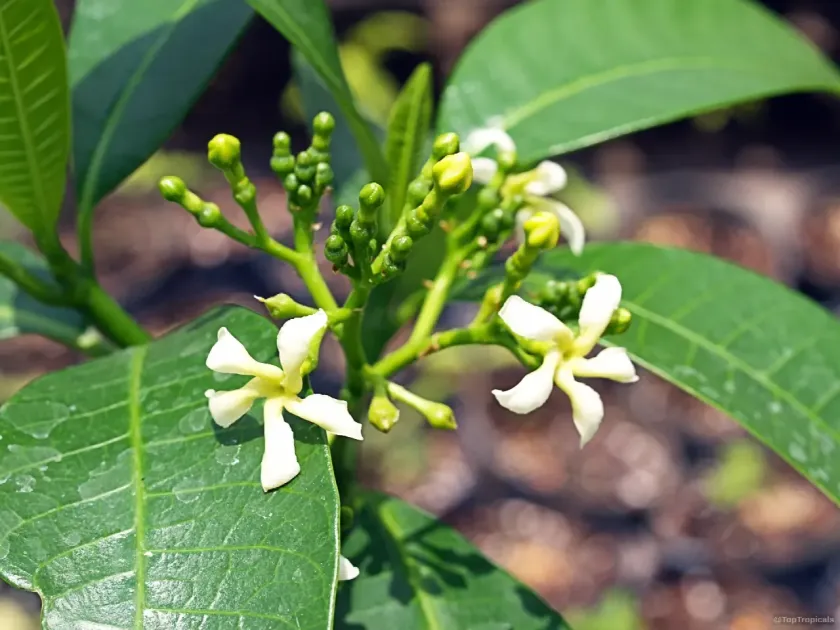
Description
Growing requirements
Tabernaemontana elegans, belonging to the Apocynaceae family, is a distinct tropical shrub native to the coastal regions and forests of East and Southern Africa. It thrives in well-drained, nutrient-rich soils that provide consistent moisture without waterlogging the root zone.
The climate requirements for this species are strict, as it is highly sensitive to cold stress. Ideally, the plant performs best in a temperature range between +20°C and +28°C. Protecting the shrub from drafts and frost is essential for its long-term survival.
High relative humidity is necessary for optimal foliage development and flower production. In greenhouse or nursery settings, maintaining a humidity level of 60% or higher is recommended to prevent leaf desiccation and promote vigorous growth cycles.
Light management is a critical factor in the cultivation of this species. While it enjoys bright conditions, direct intense sunlight can damage the leaves. Providing dappled light or using 30-40% shade cloth is standard practice to preserve the plant's aesthetic value.
Regular fertilization with a balanced NPK fertilizer supports healthy vegetative development. Pruning should be carried out after the flowering period to encourage lateral branching and maintain the desired structure of the plant for ornamental use.
Main diseases and pests
Spider mites represent a major threat, particularly in environments with poor ventilation or low humidity. Routine leaf inspections are necessary, and the application of miticides is often required once an infestation is detected.
Mealybugs are another common pest that tends to hide in the axils of the leaves. Their presence can severely weaken the plant and lead to the development of sooty mold on the honeydew they secrete, which hinders photosynthesis.
Root rot is the most frequent disease caused by poor substrate drainage or over-watering. Using a porous, peat-based growing medium with perlite or pumice is the best prophylactic measure against soil-borne pathogens.
Leaf spot diseases, often caused by fungal infections in overly humid conditions, require immediate intervention. Removing affected leaves and ensuring better airflow around the canopy usually prevents the spread of the disease.
Integrated pest management (IPM) practices, including the use of biological controls and regular sanitation of the growing area, are highly recommended. These measures reduce the reliance on chemical pesticides and ensure healthier plant growth.