
Tabernaemontana chrysocarpa
Tabernaemontana chrysocarpa
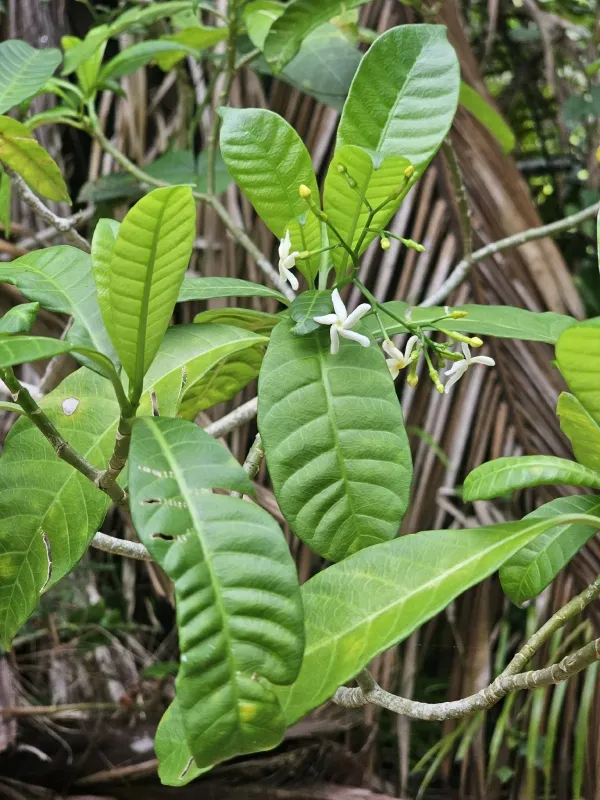
Description
Growing requirements
Tabernaemontana chrysocarpa is a member of the Apocynaceae family, commonly found as an evergreen shrub or small tree in its native South American habitats. Its botanical structure is defined by opposite, glossy leaves and the presence of laticifers that exude a milky sap, a diagnostic trait for the subfamily Rauvolfioideae.
The native range of this species covers tropical regions, where it thrives in high-humidity environments. Being a tropical plant, it requires consistent temperatures and cannot survive in frost-prone climates. Its development is tied to the ecological conditions of the Amazonian basin forests.
Agricultural requirements focus on well-draining, nutrient-rich soils. The substrate should be maintained at a slightly acidic to neutral pH level. Proper aeration of the root zone is crucial for the health of the plant, as stagnant water significantly increases the risk of root system decline.
Economic importance is derived from the phytochemical profile of the plant. Researchers often investigate this species for its alkaloid content, which serves as a foundation for potential pharmacological applications. Additionally, its aesthetic value makes it a subject of interest in tropical landscaping.
Agronomic management involves periodic fertilization and strict climate control. Irrigation should be adjusted based on the substrate moisture levels rather than a rigid schedule. In protected environments, diffused sunlight is preferred over direct exposure to minimize leaf physiological stress.
Main diseases and pests
Pest issues in Tabernaemontana chrysocarpa are mainly represented by sap-sucking insects. Mealybugs and scale insects are the most frequent threats, as they can cause extensive damage to foliage if infestation is not detected early.
Root rot caused by water-mold pathogens remains the primary physiological threat to the species. This condition is almost exclusively linked to improper irrigation practices or poor soil structure, which prevents adequate drainage.
Spider mites represent a secondary threat, particularly when grown in controlled environment agriculture where humidity might periodically drop below optimal levels. These pests thrive in dry conditions and can cause significant chlorosis of the leaves.
Fungal leaf spots can occur when air circulation is poor, leading to prolonged leaf wetness. Maintaining good ventilation is essential for preventing the spread of these pathogens across the crop.
Integrated pest management strategies are recommended, utilizing biological control agents and localized chemical treatments to manage outbreaks effectively. Regular scouting is the best practice for maintaining crop health.