
Tabernaemontana amygdalifolia
Tabernaemontana amygdalifolia
Description
Growing requirements
Tabernaemontana amygdalifolia is a member of the Apocynaceae family. This evergreen shrub or small tree is native to the tropical regions of Central and South America, where it thrives in warm, humid forest environments.
The plant requires well-drained, nutrient-rich soil to support its robust growth. It performs best in a slightly acidic to neutral substrate, ensuring that excess moisture can drain freely to protect the root system from stagnation.
For successful cultivation, light conditions are paramount. It prefers bright, filtered sunlight; exposure to intense midday sun in hot climates can scorch the leaves, so positioning in semi-shaded areas is recommended.
Agrotechnical management includes maintaining high air humidity and a steady temperature range, ideally between 20 and 28 degrees Celsius. The plant does not tolerate frost and requires a controlled environment in non-tropical zones.
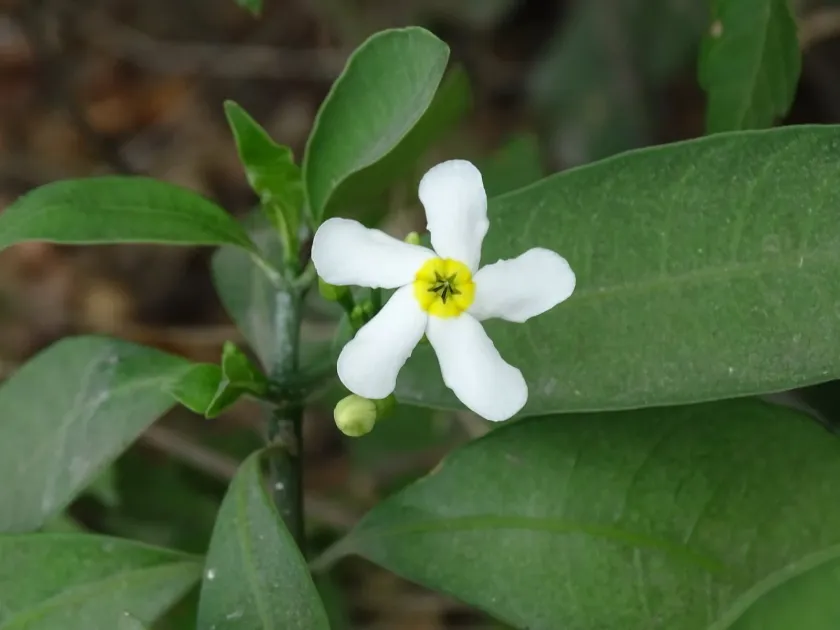
Botanically, it features lanceolate, glossy leaves similar to almond foliage. The flowers are typically white or creamy, possessing a pleasant scent, and are followed by characteristic follicles that house the plant's seeds.
Main diseases and pests
The plant is susceptible to common greenhouse pests, with mealybugs and scale insects being the most prevalent. These pests feed on the sap and can lead to stunted growth if infestations are not controlled promptly.
Spider mites are a major concern during dry, hot periods. They thrive in low-humidity environments, and their feeding patterns cause yellowing and eventual shedding of the foliage if left unchecked.
Fungal infections, particularly root rot, occur when the soil remains waterlogged for extended periods. This damage to the root system is often irreversible, requiring strict adherence to irrigation schedules.
Leaf spot diseases can arise in conditions of poor air circulation and high ambient moisture. Keeping the canopy clean and ensuring adequate spacing between individual plants is vital for disease prevention.
General plant health is maintained through integrated pest management practices. Regular inspections and the application of suitable horticultural oils or systemic treatments can effectively mitigate these threats throughout the growth cycle.