
Syzygium griffithii
Syzygium griffithii
Description
Growing requirements
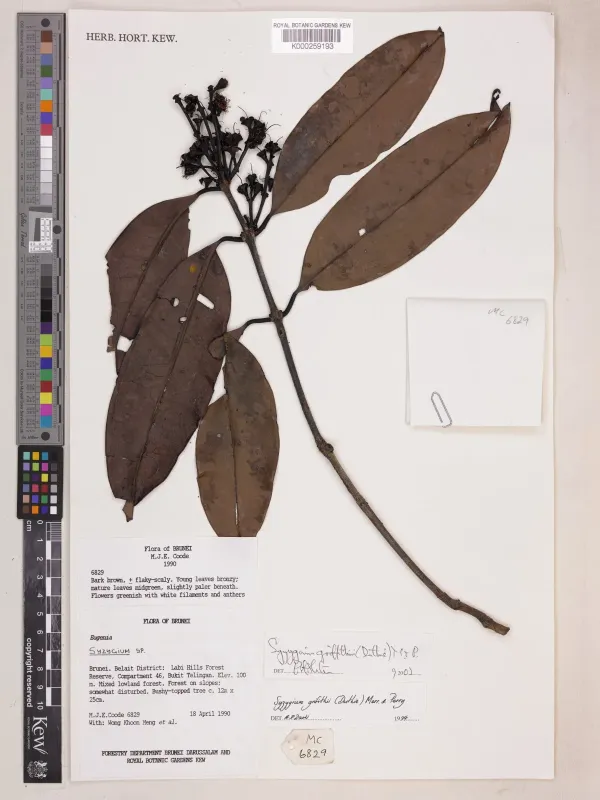
Syzygium griffithii is an evergreen woody species belonging to the Myrtaceae family. It is known for its dense foliage, smooth bark, and compact growth habit, which makes it a preferred plant for tropical botanical collections and landscaping.
This species originates from the tropical regions of Southeast Asia. It thrives in high-humidity environments and is well-adapted to the stable temperatures found in tropical rainforests, where it typically occupies forest edges or canopy layers.
For successful cultivation, the soil must be well-drained and enriched with organic matter. The pH level should preferably be slightly acidic to neutral to ensure optimal nutrient uptake, as the plant is sensitive to iron chlorosis in highly alkaline substrates.
The plant requires a consistent supply of moisture but does not tolerate standing water. In an agricultural setting, it is essential to manage irrigation systems carefully to prevent root zone saturation while maintaining high atmospheric humidity.
Commercially, Syzygium griffithii is valued for its ornamental characteristics. It is frequently used for creating topiary structures and formal hedges due to its ability to tolerate heavy pruning and its dense, evergreen canopy that remains attractive throughout the year.
Main diseases and pests
Common pests affecting Syzygium griffithii include scale insects and mealybugs. These pests attach themselves to the stems and undersides of leaves, extracting sap and weakening the plant's structural integrity over time.
Fungal diseases such as leaf spot and various types of mildew can occur if the plant is grown in areas with poor airflow and excessive humidity. Integrated pest management, including pruning for airflow and timely fungicide application, is highly recommended.