
Syzygium erythrocalyx
Syzygium erythrocalyx
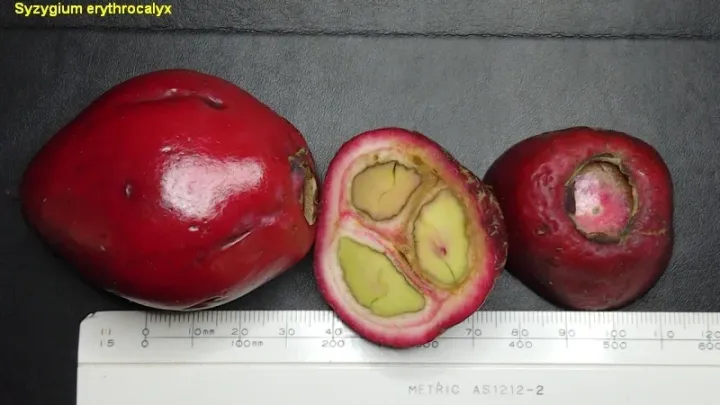
Description
Growing requirements
Syzygium erythrocalyx is a striking tropical fruit tree belonging to the Myrtaceae family. It is native to the lush rainforest regions of Queensland, Australia, where it thrives in humid conditions.
The tree requires a tropical climate without significant temperature fluctuations. It is extremely sensitive to cold and must be protected from even minor frosts, which can cause severe damage or death.
For cultivation, the plant needs rich, deep, and well-drained soils. High organic matter content is beneficial, as the natural habitat of the species is the fertile floor of a rainforest.
Water management is critical for this crop. The soil must remain consistently moist throughout the year, as the plant does not tolerate drought periods, which can lead to rapid leaf drop.
Botanically, it is known for its impressive cauliflory, where the large red flowers bloom directly from the trunk and woody branches, later developing into edible, fleshy fruits.
Harvesting
The fruits of Syzygium erythrocalyx are harvested when they reach full maturity and display a vibrant red hue, signifying that the sugars have developed sufficiently.
Due to the delicate nature of the fruit, hand-harvesting is strictly required to prevent bruising and ensure that the berries reach the consumer in perfect condition.
The post-harvest shelf life is relatively short, usually lasting only a few days under ambient conditions, which necessitates proximity to local markets for successful distribution.
Growers often employ protective coverings during the ripening phase to prevent damage from birds or insects, which are attracted to the succulent nature of the fruits.
Regular maintenance of the trees ensures that the fruit load remains manageable, which helps in producing larger, higher-quality berries during the harvest window.