
Water berry
Syzygium cordatum
Description
Sowing dates
Propagation of Syzygium cordatum for agricultural purposes is primarily achieved through seeds or semi-hardwood cuttings. Seeds should be sown immediately after collection, as they quickly lose viability if allowed to dry out.
For successful germination, a substrate with high organic content and constant moisture is required. The optimal temperature for seedling emergence is around 22–25 degrees Celsius, with protection from direct sunlight in the initial growth phase.
Cuttings are used to maintain the desirable genetic traits of the mother plant, which is crucial for commercial orchard production. Cuttings are treated with rooting hormones and placed in a greenhouse with controlled humidity levels.
Young plants are transplanted into the field once they reach a height of 30–40 centimeters and have established a well-developed root system. This ensures better adaptation to external field conditions.
Trees are planted at a spacing of at least 5–7 meters apart to account for their growth potential and wide canopy. This spacing is necessary to ensure proper aeration and light penetration to the fruit-bearing branches.
Growing requirements
Syzygium cordatum is a native of tropical and subtropical regions of Africa, belonging to the Myrtaceae family. This crop prefers moist habitats and is frequently found along riverbanks and near water sources.
The plant has specific soil requirements; it thrives best in deep, fertile, well-drained loams or alluvial soils. It is critical to avoid waterlogging despite the plant's natural preference for moisture.
The optimal temperature range for this crop is 18 to 30 degrees Celsius. Syzygium is sensitive to freezing temperatures, which can critically damage both young shoots and mature trees.
Sufficient light is necessary for healthy crown development; however, in extremely hot climates, the crop responds well to light shading during peak hours. In regions with irregular rainfall, regular irrigation is essential for productivity.
Annual application of organic fertilizers in the root zone is recommended as a standard agronomic practice. This maintains high soil fertility levels and stimulates vigorous vegetative growth.
Yield
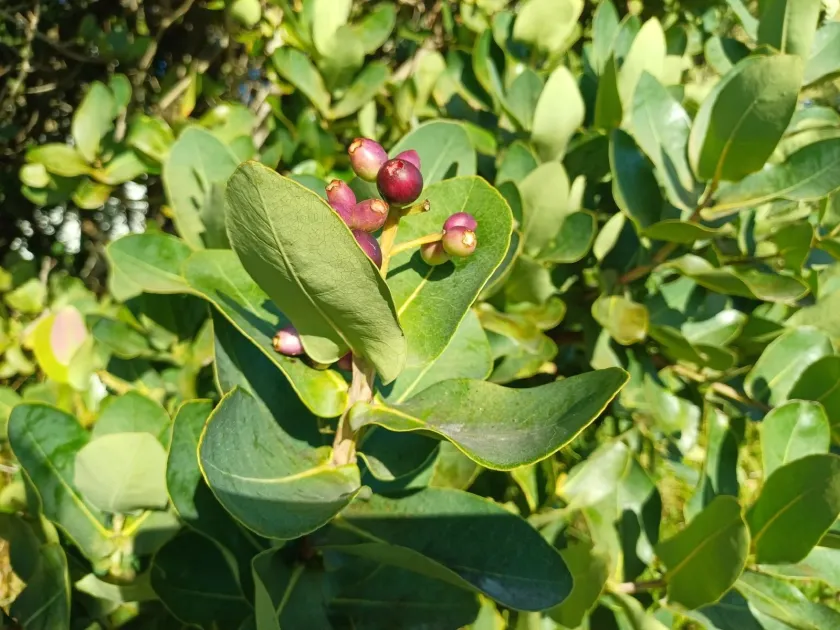
The economic value of the water berry lies in its edible fruits, which are consumed fresh or processed. The fruits are succulent, deep purple berries with a sweet-tart flavor profile.
The yield of a mature tree can be quite high under proper management and favorable climate conditions. On average, trees begin bearing fruit within 3–5 years, gradually increasing production capacity over time.
The fruits are frequently used for producing jams, jellies, wines, and liqueurs. Due to the high pectin content, these berries are excellent for culinary applications that require thickening or gelling properties.
Beyond the fruit, the tree is highly valued as a honey plant. Bees actively forage on its blossoms, resulting in a high-quality, aromatic honey that commands a steady demand in local markets.
The timber of Syzygium cordatum is also utilized for its strength and durability in carpentry. Thus, the crop is considered multi-purpose, bridging the gap between food production and forestry.
Main diseases and pests
The primary diseases affecting Syzygium are fungal leaf infections, often caused by excessive humidity and poor canopy ventilation. Rust and leaf spot diseases are most common and require fungicide treatments.
Pests such as scale insects and mealybugs can cause significant damage to young shoots and fruits. They feed on plant sap, weakening the tree and promoting the growth of sooty mold.
Integrated pest management, including regular field inspections and the use of biological control agents, is recommended. In cases of heavy infestation, targeted contact insecticides should be applied.
Root rot may occur due to improper irrigation management or poor soil drainage. This disease is difficult to treat once established, so the emphasis in agronomy is placed on prevention by managing water levels.
Sanitary pruning is a critical protection measure, allowing for the removal of infected branches and improving light exposure. This reduces the risk of secondary infections and enhances overall tree vigor.
Harvesting
Harvesting of the water berry is carried out manually as the fruits reach maturity. Fully ripe fruits exhibit a characteristic deep purple or almost black color and feel soft to the touch.
Because the fruits are prone to physical damage, they should be placed in shallow containers in single or double layers. This practice prevents bruising and spoilage during transportation to processing facilities.
The harvest period is often staggered because fruit ripening on the tree does not occur uniformly. Farmers typically conduct multiple selective pickings throughout the fruiting season.
Immediately after harvest, the produce should be cooled if it is intended for the fresh market. This significantly extends the shelf life of the berries, which spoil rapidly at room temperature due to their sugar content.
Processed products like jams or wines should be stored in dry, cool conditions. Long-term quality stability depends directly on maintaining hygiene during harvesting and primary processing steps.