
Syzygium canicortex
Syzygium canicortex
Description
Growing requirements
Syzygium canicortex is a notable evergreen tree belonging to the Myrtaceae family. It is native to the tropical rainforests of northern Queensland, Australia, where it thrives in high-rainfall environments characterized by constant humidity and stable, warm temperatures throughout the year.
For successful cultivation, the species requires deep, fertile soils that are well-drained. Given its natural affinity for alluvial sites, the plant performs best in areas where the soil profile is rich in organic matter and maintains consistent moisture levels without becoming waterlogged.
The climate requirements for this tree are strictly tropical. It cannot tolerate frost or significant drops in temperature, necessitating a frost-free environment to prevent damage to the foliage and vascular system. Adequate sunlight is essential for the tree's photosynthesis and development.
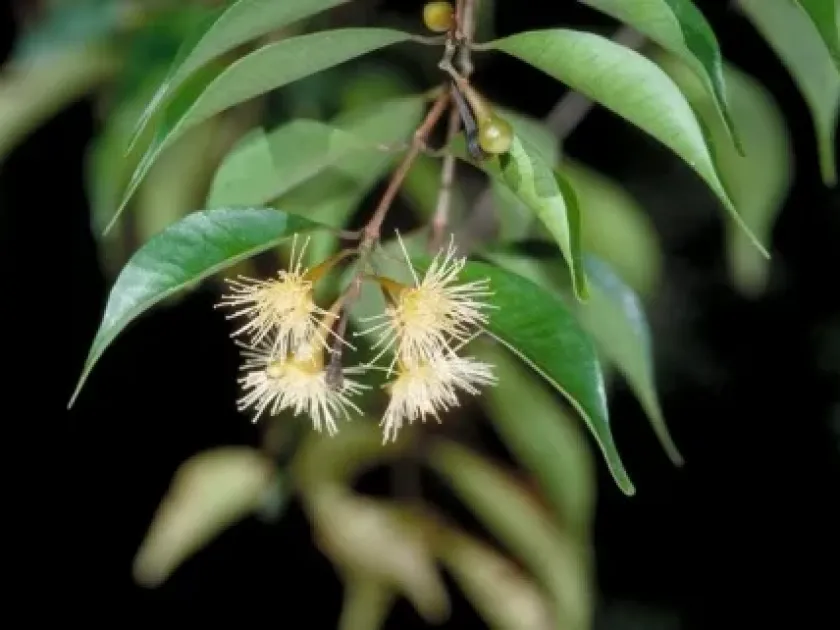
Botanically, the species is identified by its distinct gray, flaky bark, which differentiates it from other members of the genus. The leaves are opposite and leathery, containing aromatic essential oils typical of the Myrtaceae family, which contribute to the tree's natural defense mechanisms.
Economically, Syzygium canicortex is valued for its role in biodiversity preservation and reforestation projects within its native range. Its wood is generally recognized for its durability, and the tree serves as a critical habitat for native fauna, emphasizing its importance in forest management.
Main diseases and pests
A primary concern for the health of Syzygium canicortex is the susceptibility to fungal pathogens, most notably Myrtle Rust (Puccinia psidii). This disease can cause severe damage to leaves and stems, leading to stunted growth and potentially fatal stress for the tree if not managed correctly.
Various insect pests, such as scale insects and leaf-miners, also represent potential threats, especially in young plantation stages. Regular monitoring and the implementation of integrated pest management strategies are essential to maintain the structural integrity and longevity of the trees.