
Syzygium boonjee
Syzygium boonjee
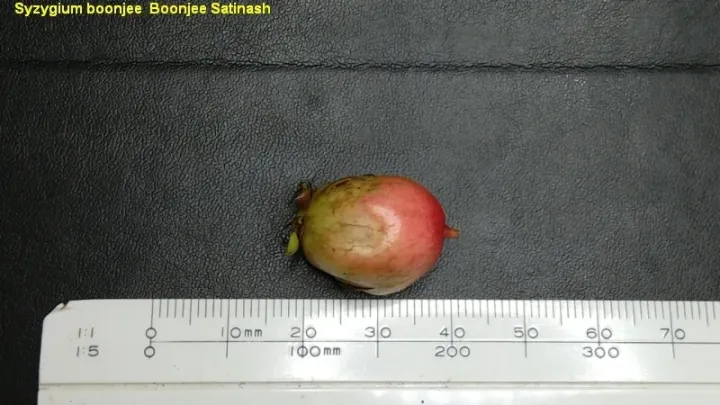
Description
Sowing dates
Syzygium boonjee is a woody perennial typically propagated via seeds or vegetative methods such as cuttings to ensure the preservation of varietal characteristics.
Seeds of this species exhibit short viability, necessitating immediate sowing into a porous, moisture-retentive medium under warm greenhouse conditions to ensure germination.
Vegetative propagation via semi-hardwood cuttings requires the use of rooting hormones and high humidity chambers to promote successful adventitious root formation.
The optimal planting schedule for commercial orchards coincides with the onset of the wet season, providing the seedlings with a stable climate for root establishment.
Young plants are particularly vulnerable to environmental stress and must be kept in partial shade during their early development stages to prevent foliar scorching.
Growing requirements
As a member of the Myrtaceae family native to the tropical rainforests of Queensland, this crop thrives in environments characterized by high ambient humidity.
Cultivation requires fertile, well-draining soils with a slightly acidic pH, which helps facilitate the efficient uptake of essential nutrients for robust tree growth.
Syzygium boonjee is highly sensitive to freezing temperatures and is strictly suitable for tropical or subtropical climates where thermal stability is maintained year-round.
Consistent irrigation is vital, as the plant lacks drought tolerance and requires a steady moisture supply to support leaf development and subsequent fruit production.
Nutrient management involves balanced fertilization, utilizing both organic compost and controlled-release minerals to sustain the soil structure and tree health.
Yield
The yield of Syzygium boonjee is influenced by the maturation of the canopy and the effectiveness of local pollinator activity within the agricultural environment.
The fruits, which are small and succulent, are recognized for their distinct organoleptic profile, making them highly desirable for specialty markets and culinary use.
The crop serves as a valuable niche product for small-scale fruit farms that focus on organic or exotic tropical produce for artisanal food sectors.
High levels of antioxidants and nutritional density add economic value to the harvest, catering to the growing consumer demand for healthy, unique tropical fruits.
Improving orchard management through strategic pruning and pest monitoring significantly enhances the total marketable yield and quality of the final harvest.
Main diseases and pests
Fungal pathogens represent the primary biological threat to this species, often thriving in the dense, moist canopy characteristic of tropical orchard environments.
Pests such as scale insects and mealybugs can cause significant damage by extracting sap from tender new growth, thereby weakening the vigor of the trees.
Fruit flies are a critical concern for producers, as they can decimate the harvest through oviposition in ripening fruit, necessitating proactive control measures.
Sanitation practices, including the removal of deadwood and thinning of the canopy, are essential to improve airflow and reduce the incidence of disease outbreaks.
Integrated Pest Management (IPM) strategies, favoring biological controls over chemical pesticides, are highly recommended to maintain the safety of the fruit produce.
Harvesting
Harvesting is a delicate manual operation, requiring skilled workers to carefully pick the fruits at the peak of maturity to ensure high product quality.
Indicators of maturity include a characteristic shift in peel color and the development of a specific aroma, signaling that sugar levels have reached an optimal point.
Harvesting is best conducted during the cooler hours of the morning to reduce field heat, which helps minimize respiration rates and delays post-harvest deterioration.
The fruits must be packed in ventilated containers to allow for airflow, as the high moisture content makes them susceptible to rapid spoilage during storage.
Post-harvest cold chain logistics are essential for long-distance transport, preserving the flavor profile and nutritional integrity of this exotic tropical crop.