
Syzygium balsameum
Syzygium balsameum
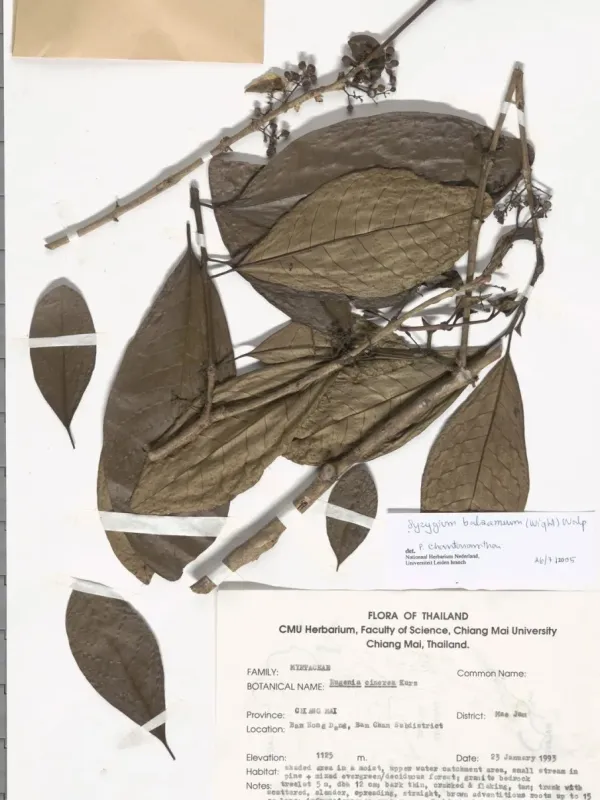
Description
Growing requirements
Syzygium balsameum is an evergreen tree species belonging to the Myrtaceae family. Known for its aromatic properties and dense foliage, it is a significant representative of tropical flora, often found in humid forest ecosystems.
The native habitat of this species includes the tropical regions of Southeast Asia. It thrives in environments where high humidity and temperatures remain consistent throughout the year, supporting the growth of its distinctive glossy leaves.
For optimal cultivation, the species requires well-drained, nutrient-rich soils. While it prefers moist conditions, it is sensitive to waterlogging, necessitating proper drainage systems in agricultural settings to prevent root rot.
Regarding climate, the plant requires a warm, frost-free environment with plenty of bright, indirect sunlight. In arid or cooler climates, it must be grown in controlled conditions such as greenhouses to maintain the necessary humidity levels.
Agronomic management involves periodic fertilization to support biomass production, especially during the active growth phase. Pruning may also be required to maintain the shape of the tree and encourage denser growth for better yields.
Harvesting
The plant is primarily utilized in the production of essential oils for the fragrance and pharmaceutical industries. Its aromatic resinous properties are highly valued, making it a target for sustainable harvesting of leaves and twigs.
Harvesting techniques involve selective gathering of plant material to ensure the long-term viability of the population. The process is typically performed during the dry season to maximize the concentration of volatile oils within the leaves.