
Monstera adansonii
Monstera adansonii Schott
Description
Growing requirements
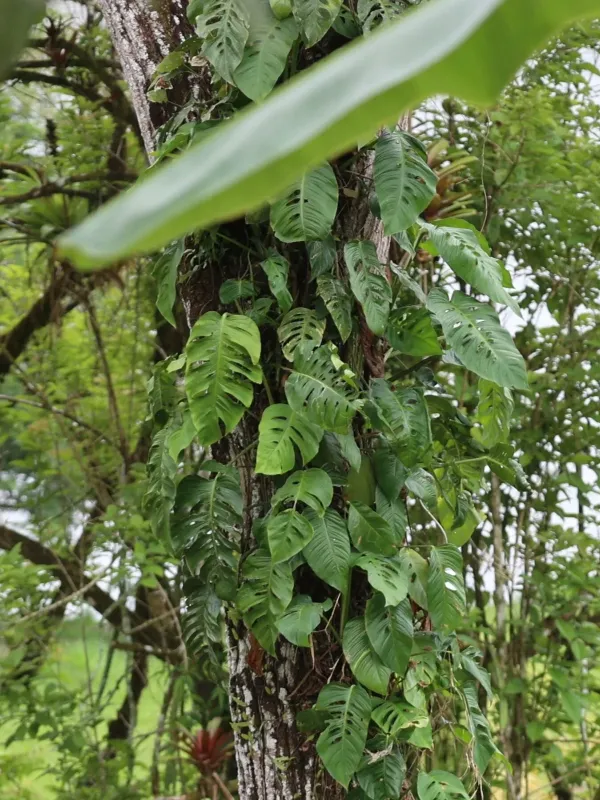
Monstera adansonii is an evergreen perennial vine belonging to the Araceae family. Originating from the tropical rainforests of Central and South America, it is a highly valued species in the horticultural and decorative plant industry.
The plant is characterized by its distinctive fenestrated leaves, which feature irregular holes known as perforations. This morphological trait is an evolutionary adaptation for managing sunlight penetration and wind resistance in its natural canopy habitat.
Successful cultivation requires a stable climate with temperatures between 18°C and 26°C. It thrives in high-humidity environments, necessitating levels between 60% and 80%, which is crucial for preventing leaf edge necrosis.
Soil requirements involve a well-draining, loose, and slightly acidic medium. An ideal substrate consists of a mixture of pine bark, perlite, peat moss, and activated charcoal to facilitate optimal root aeration and prevent compaction.
Proper agronomic management involves providing a trellis or moss pole for support, as the plant is a vigorous climber. Fertilization should be focused during the growing season using a balanced, water-soluble fertilizer applied at half-strength to avoid salt accumulation.
Main diseases and pests
The plant is susceptible to common pests such as spider mites, mealybugs, and scale insects. These pests often proliferate in environments where air circulation is restricted or humidity levels are inconsistent.
Fungal pathogens causing root rot are the most significant threat to the culture. This condition is primarily induced by over-irrigation and poor drainage, leading to the rapid decay of the root system and eventual plant mortality.
Leaf spot diseases, often caused by bacterial or fungal infections, appear as discolored lesions on the foliage. To mitigate this, it is essential to ensure that foliage remains dry and that adequate airflow is maintained within the planting area.
Integrated pest management protocols, including the use of neem oil or systemic insecticides, are effective in controlling infestations. Early detection through regular crop scouting is vital for maintaining plant health.
Sanitation practices, such as removing senescent or diseased leaves, significantly reduce the inoculum load of potential pathogens, ensuring the long-term viability and growth of the Monstera adansonii crop.