
Monstera adansonii x deliciosa
Monstera adansonii Schott x M. deliciosa Liebm.
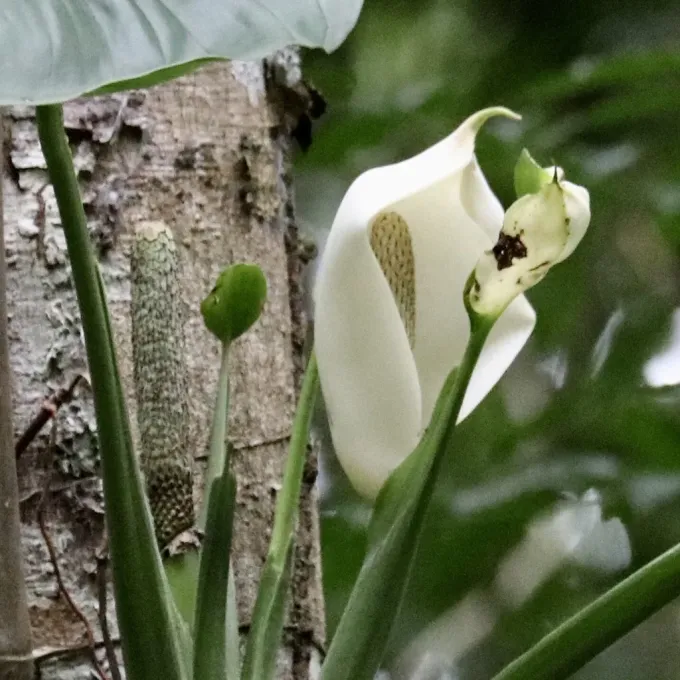
Description
Growing requirements
Monstera adansonii x deliciosa is a hybrid member of the Araceae family, capturing the aesthetic traits of both parent species. This plant requires a stable environment that mimics its natural tropical habitat, favoring consistent humidity and diffused lighting conditions.
Environmental temperature should remain between 20°C and 27°C. It is essential to avoid cold drafts, as sudden thermal changes can cause physiological stress, resulting in brown edges on the foliage and a slowdown in new leaf development.
High humidity is crucial for this plant's health. In indoor settings, maintaining humidity levels above 60% through misting, humidifiers, or pebble trays is recommended to keep the foliage vibrant and prevent the tips from drying out.
The potting medium must be well-draining, mimicking the porous forest floor. A blend of peat moss, pine bark, perlite, and a small amount of charcoal is ideal for providing structural support while allowing the roots to breathe efficiently.
Watering frequency should be determined by the moisture level of the top layer of the soil. Always ensure the pot has drainage holes, as this hybrid is highly susceptible to root rot if left in standing water for extended periods.
Main diseases and pests
Spider mites are the most common pests found on this Monstera, especially when the ambient air is too dry. These microscopic pests create fine webs on the undersides of leaves, requiring immediate attention with neem oil or insecticidal soap.
Mealybugs are often identified by their white, cotton-like appearance in the leaf axils. Regular inspections are necessary because these pests can quickly colonize the plant and sap its energy, leading to deformed growth.
Thrips can cause significant cosmetic damage by rasping the leaf surfaces, leaving behind discolored patches or silvery streaks. Controlling thrips involves isolating the affected plant and applying systematic pest management.
Root rot, caused by overwatering or poor drainage, is a lethal threat. Indicators include yellowing of the lower leaves, a mushy texture at the base of the stem, and a sour smell emanating from the soil mix.
Fungal spot diseases can occur if the leaves remain wet for too long in poor light. To minimize these risks, ensure good airflow around the plant and avoid getting water directly on the foliage during evening watering sessions.