
Monstera deliciosa
Monstera deliciosa Liebm.
Description
Growing requirements
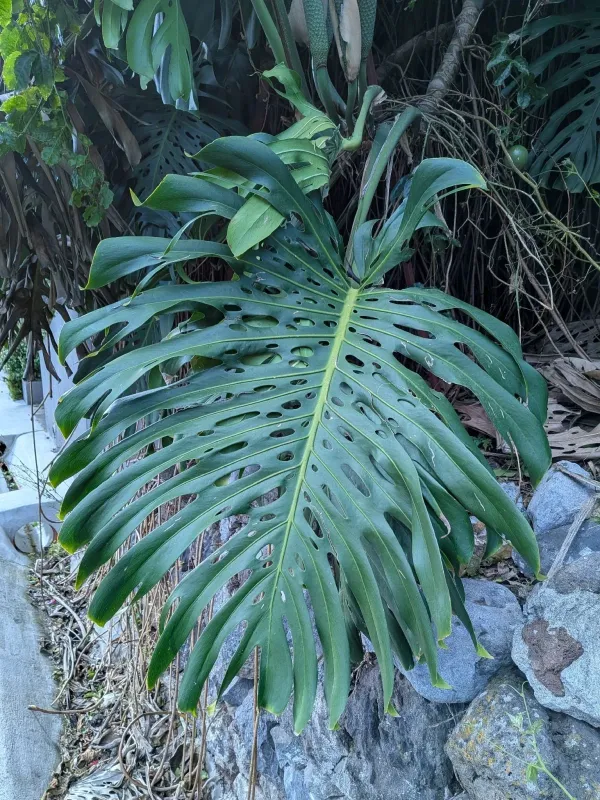
Monstera deliciosa, commonly known as the Swiss cheese plant, is a species of flowering plant in the Araceae family. Originating from the tropical rainforests of Southern Mexico and Central America, this plant has evolved as an aggressive climber, utilizing aerial roots to scale tall trees in its native habitat.
The agronomic success of this crop depends heavily on tropical conditions, requiring temperatures consistently between 20°C and 30°C. Cold sensitivity is a major factor, as exposure to frost or temperatures below 10°C will cause severe damage to the foliage and potentially kill the plant.
High relative humidity, ideally exceeding 70%, is essential for sustaining active growth. In controlled environment agriculture, such as high-tech greenhouses, misting systems and automated climate controls are employed to maintain the required atmospheric moisture and stable ambient temperature.
The ideal substrate for Monstera deliciosa must provide excellent aeration and drainage. A mixture containing peat moss, pine bark, and perlite is commonly used to create a medium that supports the heavy root system while preventing waterlogging, which is a leading cause of plant mortality.
Light management is crucial, as Monstera is naturally an understory plant. In a farming context, filtered or indirect bright light is preferred to maximize photosynthesis while preventing leaf scorch, which occurs under intense, direct tropical sun exposure.
Yield
While primarily cultivated as an ornamental, Monstera deliciosa is also commercially significant for its edible, composite fruit. The yield is measured by the number of spadix-type fruits produced, which require precise nutrient management and maturity observation to harvest safely.
The ripening process of the fruit is lengthy, often requiring up to a year. Agronomists monitor the fruit for the detachment of individual hexagonal scales, which indicates that the calcium oxalate crystals have dissipated, making the fruit safe for harvest and consumption.
Main diseases and pests
Common pests affecting this species include spider mites, mealybugs, and scale insects. These pests proliferate rapidly in dry environments, making the maintenance of optimal humidity an effective integrated pest management strategy to prevent infestation.
Pathogenic threats are dominated by fungal infections such as Pythium or Phytophthora, which result from excessive soil moisture and poor drainage. Proper cultural practices, including consistent moisture monitoring and the use of sterile growing media, are the primary methods for disease control.