
Sutera hybrid
Sutera hybrids
Description
Growing requirements
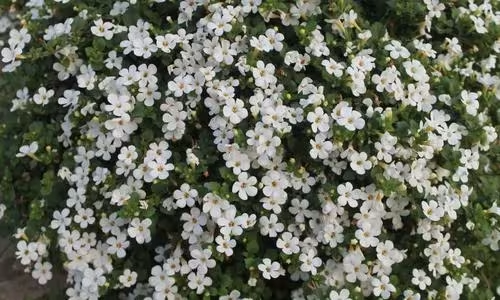
Sutera hybrid, widely recognized by the horticultural name Bacopa, is a member of the Scrophulariaceae family. It is a highly valued ornamental plant known for its trailing growth habit and prolific, small, star-shaped flowers that bloom continuously throughout the growing season.
Originating from the subtropical regions of Southern Africa, the plant is naturally adapted to moist, humid habitats. While perennial in its native climate, it is typically cultivated as an annual or a greenhouse perennial in temperate regions.
Botanically, the plant features thin, branched stems that spread horizontally, making it an excellent choice for hanging baskets and container arrangements. The foliage is small, bright green, and serrated, providing a dense backdrop for the floral displays.
The plant demands a consistently moist, well-draining, and nutrient-rich substrate to thrive. It performs best in partial shade, as intense direct sunlight during the afternoon can scorch the delicate leaves and cause the plant to wilt rapidly.
Consistent irrigation is critical for Sutera. The soil should never be allowed to dry out completely, as water stress leads to the immediate shedding of flowers and stunted growth. Balanced liquid fertilizers should be applied regularly to support sustained flowering.
Main diseases and pests
The primary pests affecting Sutera hybrids are aphids, which cluster on tender new growth, and whiteflies, which thrive in crowded, stagnant conditions. Spider mites may also occur in environments with low humidity and high temperatures.
Root rot caused by overwatering and lack of soil aeration is the most frequent disease. Poor air circulation combined with high humidity can also lead to Botrytis blight, which manifests as gray mold on the foliage and stems.
Effective management strategies include maintaining proper spacing between containers to ensure adequate airflow. Watering should be performed at the base of the plant to keep the foliage dry, which significantly reduces the risk of fungal infections.
When chemical control is necessary, choose selective insecticides that are safe for ornamental use. For fungal issues, fungicides based on copper or other systemic agents can be applied preventively during periods of high humidity.
Regular pruning and maintenance are essential for plant health. Deadheading spent flowers and trimming back leggy stems encourages secondary branching, improves plant vigor, and decreases the surface area susceptible to pest infestations.