
Strobilanthes dyeriana
Strobilanthes dyeriana Mast.
Description
Growing requirements
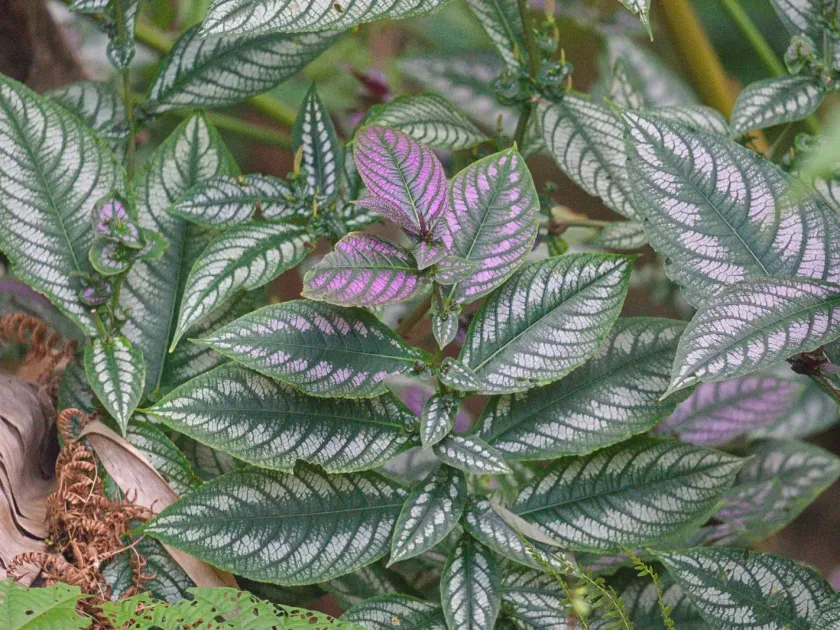
Strobilanthes dyeriana, commonly known as the Persian Shield, is a highly decorative member of the Acanthaceae family. Originally from Myanmar, it is widely prized for its iridescent, metallic purple and silver foliage that makes it a standout specimen in both indoor and greenhouse settings.
To thrive, this plant requires a consistent environment with temperatures ranging between 18 and 25 degrees Celsius. It is highly sensitive to cold drafts and rapid temperature fluctuations, which can easily lead to foliage damage and premature leaf drop.
The ideal growing medium for this species should be rich in organic matter, well-draining, and slightly acidic. A mix of peat, composted leaf mold, and perlite ensures that the root system remains healthy and free from oxygen deprivation.
Regular, balanced irrigation is essential for the Persian Shield. The soil should be kept consistently moist but never waterlogged; over-watering is the most common cause of failure in cultivating this tropical plant.
High relative humidity is critical for maintaining the plant's signature color intensity. Growers should utilize pebble trays with water or mechanical humidifiers to ensure ambient humidity levels remain above 60 percent throughout the year.
Main diseases and pests
The Persian Shield is primarily susceptible to infestations of spider mites, especially in environments where air humidity levels fall too low for extended periods.
Mealybugs and aphids may occasionally colonize the undersides of the leaves or stem axils, requiring manual removal or the application of insecticidal soaps.
Root and crown rot are frequent issues caused by over-watering or the use of heavy, poorly draining soil mixtures that prevent adequate root aeration.
Preventative measures include maintaining good air circulation around the foliage and performing regular inspections of the plant's health to catch pests in their early stages.
If fungal infections appear, immediate action is required, including the removal of affected areas and the application of appropriate systemic fungicides to save the plant structure.