
Stoebe vulgaris
Stoebe vulgaris
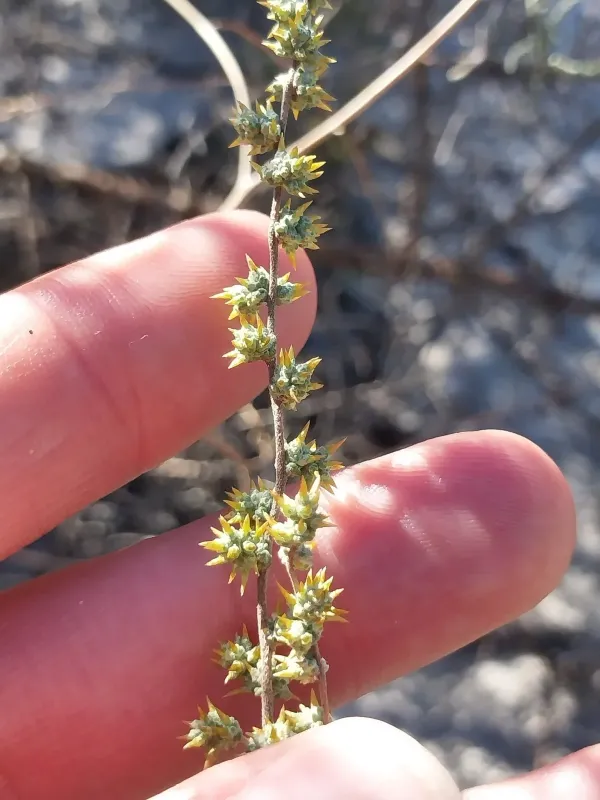
Description
Growing requirements
Stoebe vulgaris is a perennial subshrub belonging to the Asteraceae family. This species is native to arid environments, where it has developed specific physiological adaptations to survive in nutrient-poor and moisture-stressed conditions.
The plant thrives in well-drained, sandy, or rocky soils with high aeration. It has a high tolerance for low fertility levels but is strictly intolerant of waterlogging, which often leads to root rot and systemic failure of the plant's vascular tissues.
In terms of climatic requirements, this crop demands significant exposure to direct sunlight. It thrives in regions with low humidity and high thermal amplitudes, where its deep root system can effectively penetrate the soil to secure necessary moisture.
Agronomic management of Stoebe vulgaris focuses on soil stabilization and phytoremediation. Due to its growth pattern, it serves as an excellent ground cover for degraded landscapes, preventing topsoil loss caused by strong winds in arid agricultural regions.
Cultivation practices involve minimal intervention, as the species is well-adapted to its natural ecosystem. However, during the establishment phase, weeding is necessary to prevent competition for light and mineral nutrients from more invasive species.
Main diseases and pests
Fungal pathogens represent the most significant threat to Stoebe vulgaris, particularly in environments where humidity levels exceed the plant's tolerance threshold. These diseases typically manifest as root or collar rots that restrict water uptake.
Insect pests, such as mites and certain soil-borne larvae, can cause damage by feeding on foliage or subterranean parts. Monitoring during the peak growing season is critical to prevent significant yield losses or plant mortality.
Effective pest management includes cultural practices like maintaining appropriate spacing to maximize air circulation within the canopy. This reduces the micro-humidity levels that favor the spread of fungal spores and pests.
When chemical intervention is required, only products specifically labeled for use on drought-tolerant shrubs should be applied. The use of broad-spectrum pesticides is generally discouraged to avoid disrupting the local pollinator population.
Sanitation is a vital aspect of disease control; removing dead or diseased biomass helps reduce the primary inoculum load. Properly disposing of infested material is key to preserving the health of a plantation over several growing cycles.