
Silky beach grass
Spinifex sericeus
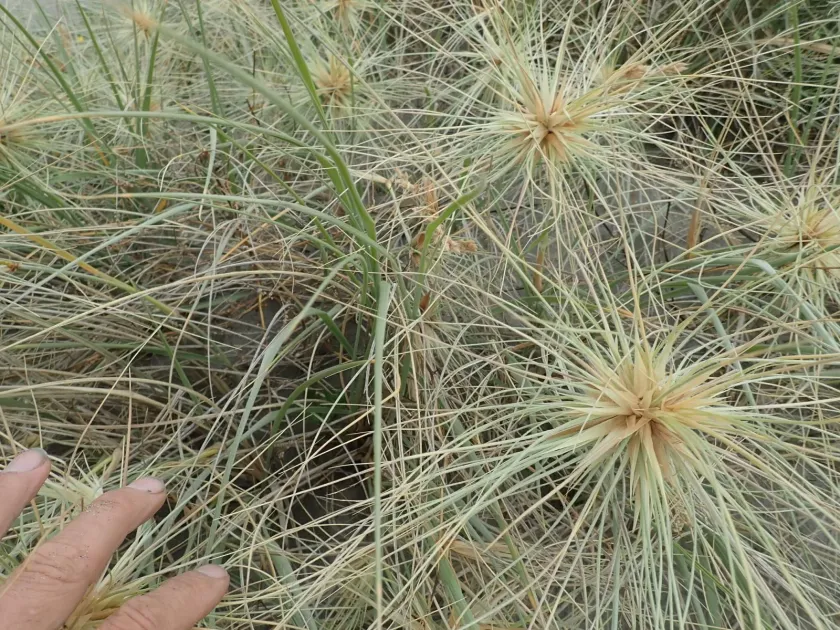
Description
Sowing dates
Spinifex sericeus, a member of the Poaceae family, primarily reproduces via wind-dispersed seeds that are adapted to travel across coastal dunes.
In cultivation, sowing is best performed during early spring, utilizing seeds collected from mature, dried female inflorescences.
Direct seeding often shows low germination rates, so greenhouse propagation followed by transplanting is the standard practice for dune restoration projects.
Seedlings should be planted at a depth of 5-10 centimeters, ensuring that the root system is well-covered to protect against immediate desiccation.
This grass species is essential for initiating plant succession on unstable sand, eventually leading to more stable coastal ecosystems.
Growing requirements
The plant thrives in full sun exposure and is highly specialized to endure extreme salinity levels typical of oceanfront locations.
Soil requirements are minimal; it excels in loose, nutrient-poor, well-draining sandy substrates where other plants struggle to establish.
Optimal growth occurs in maritime climates where temperatures remain moderate, avoiding deep freezes that could damage the extensive root network.
While tolerant to low nutrient levels, nitrogen availability can significantly boost biomass production in newly established coastal plantations.
Regular air circulation is crucial to prevent the buildup of moisture, which can otherwise lead to detrimental physiological stress.
Main diseases and pests
Invasive exotic plants often pose a significant competitive threat, displacing native Spinifex populations and disrupting natural dune dynamics.
Various insect pests, including stem borers and leaf-eating caterpillars, can impact the vigor of the grass during the active growing season.
Pathogenic fungi thrive in the humid microclimates created within dense mats, leading to localized root rot or leaf spot diseases.
Human activities, such as off-road vehicle usage and heavy beach foot traffic, are direct physical threats that crush the delicate growing points.
Extreme storm events, while natural, can cause massive erosion that leaves the plants uprooted and unable to recover in depleted sand areas.