
Hairy Spinifex
Spinifex hirsutus
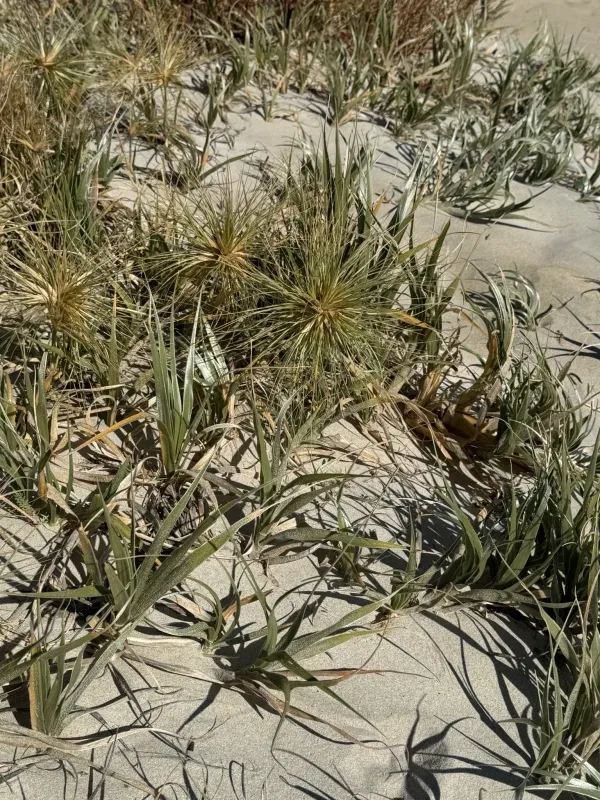
Description
Growing requirements
Hairy Spinifex (Spinifex hirsutus) is a perennial grass species belonging to the Poaceae family. It is native to the coastal regions of Australia and New Zealand, where it thrives in harsh sandy environments and plays a crucial role in dune stabilization.
The plant is morphologically adapted to its environment through long, creeping runners that anchor the grass firmly into the shifting sand. Its leaves are covered in fine, silky hairs, which help the plant retain moisture and withstand the abrasive effects of wind-blown sand.
This species requires full sun exposure and well-draining sandy soils to prosper. It is exceptionally tolerant of salt spray and periodic inundation, making it an ideal candidate for restoring degraded coastal ecosystems and preventing soil degradation.
Cultivation practices involve transplanting segments of the stolons into coastal zones during favorable climatic windows. Once established, the plant requires very little maintenance, as it is adapted to the nutrient-poor conditions typical of sand dunes.
In terms of agricultural and environmental utility, Hairy Spinifex is primarily used for sand binding. By forming a dense, interlocking carpet of vegetation, it traps moving sand and prevents the loss of coastal land to erosion, thereby protecting adjacent inland agricultural fields.
Main diseases and pests
The main threats to Hairy Spinifex populations include the introduction of invasive weed species that compete for resources, particularly in the early establishment phase. Overgrazing by livestock or excessive human foot traffic can damage the runners and lead to erosion of the dune base.
While generally hardy, the plant can be susceptible to fungal infections in areas where drainage is impeded or humidity levels remain consistently high. Insects such as lepidopteran larvae may occasionally graze on the foliage, but typically do not cause significant damage to established colonies.