
Scaly tree fern
Sphaeropteris squamulata
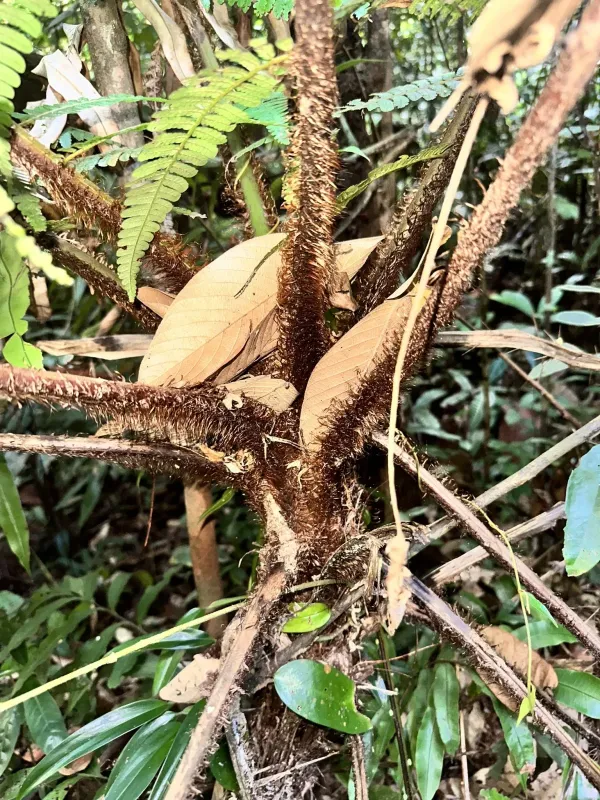
Description
Growing requirements
The scaly tree fern, known scientifically as Sphaeropteris squamulata, belongs to the family Cyatheaceae. This species is native to tropical habitats and is prized for its impressive arborescent structure and textured appearance.
To ensure successful growth, high ambient humidity is non-negotiable. Ideally, the plant should be kept in environments that replicate tropical conditions, maintaining a consistent humidity level of at least 75 percent throughout the growth cycle.
The substrate must be well-draining, nutrient-rich, and slightly acidic. A mix consisting of organic matter such as peat, coarse tree bark, and perlite provides the necessary structure to support the plant's massive vertical growth without compacting the roots.
Regarding temperature, Sphaeropteris squamulata prefers steady warmth. It does not tolerate frost, and even short exposure to temperatures below 10 degrees Celsius can cause irreversible damage to the fronds and the growing point.
Light management is a critical aspect of its care. While the fern requires bright light to fuel its photosynthesis, direct sunlight is strictly prohibited as it scorches the delicate leaves. Filtered light, such as that found under a canopy, is the best imitation for this species.
Main diseases and pests
Common pests include scale insects and spider mites, particularly in indoor settings with low airflow. Regular monitoring of the undersides of the fronds is essential for early detection and mitigation of these infestations.
Root rot remains the most significant health threat for the scaly tree fern. It is usually caused by overwatering or poor drainage systems. Maintaining a delicate balance between moisture and drainage is the primary requirement for preventing fungal pathogen development.